Insights · A guide for your wedding
A Greek Orthodox wedding is one of the most beautiful ceremonies to experience, and to photograph. But for couples from abroad, and for Greeks of the diaspora marrying in Greece for the first time, much of what happens in front of the altar screen is unfamiliar.
This guide walks through the ceremony in order: what happens at each moment, what it means, and what it looks like from where we stand, behind the camera.
Contents (11)
- The key difference: no vows
- The betrothal: the rings and the candles
- The crowning
- The readings, and a custom that isn't a Church custom
- The common cup
- The Dance of Isaiah
- The end of the ceremony
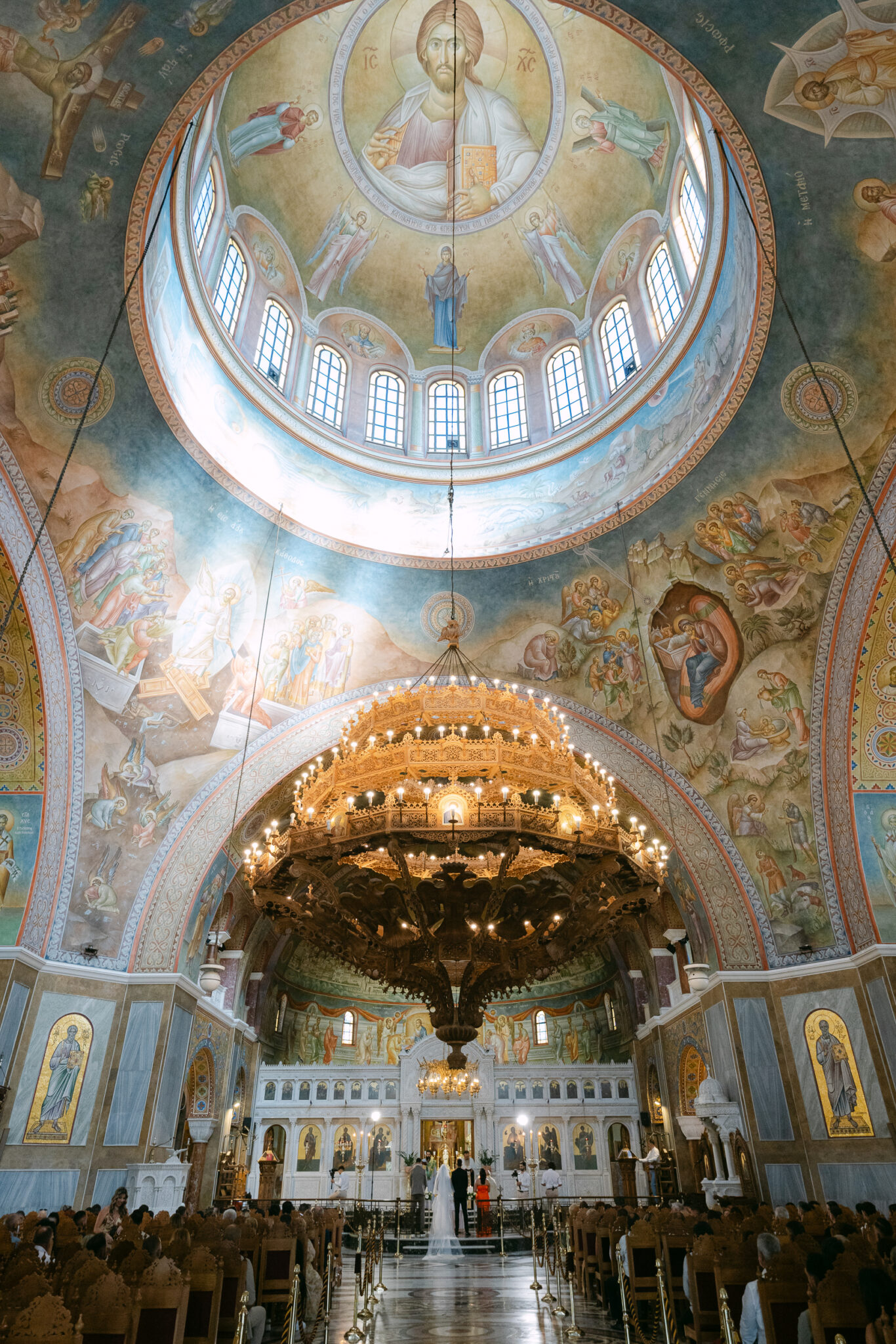
- Photography inside the church: what to know
- Practical points for couples from abroad
- Customs around the wedding
- Frequently asked questions about the Greek Orthodox wedding
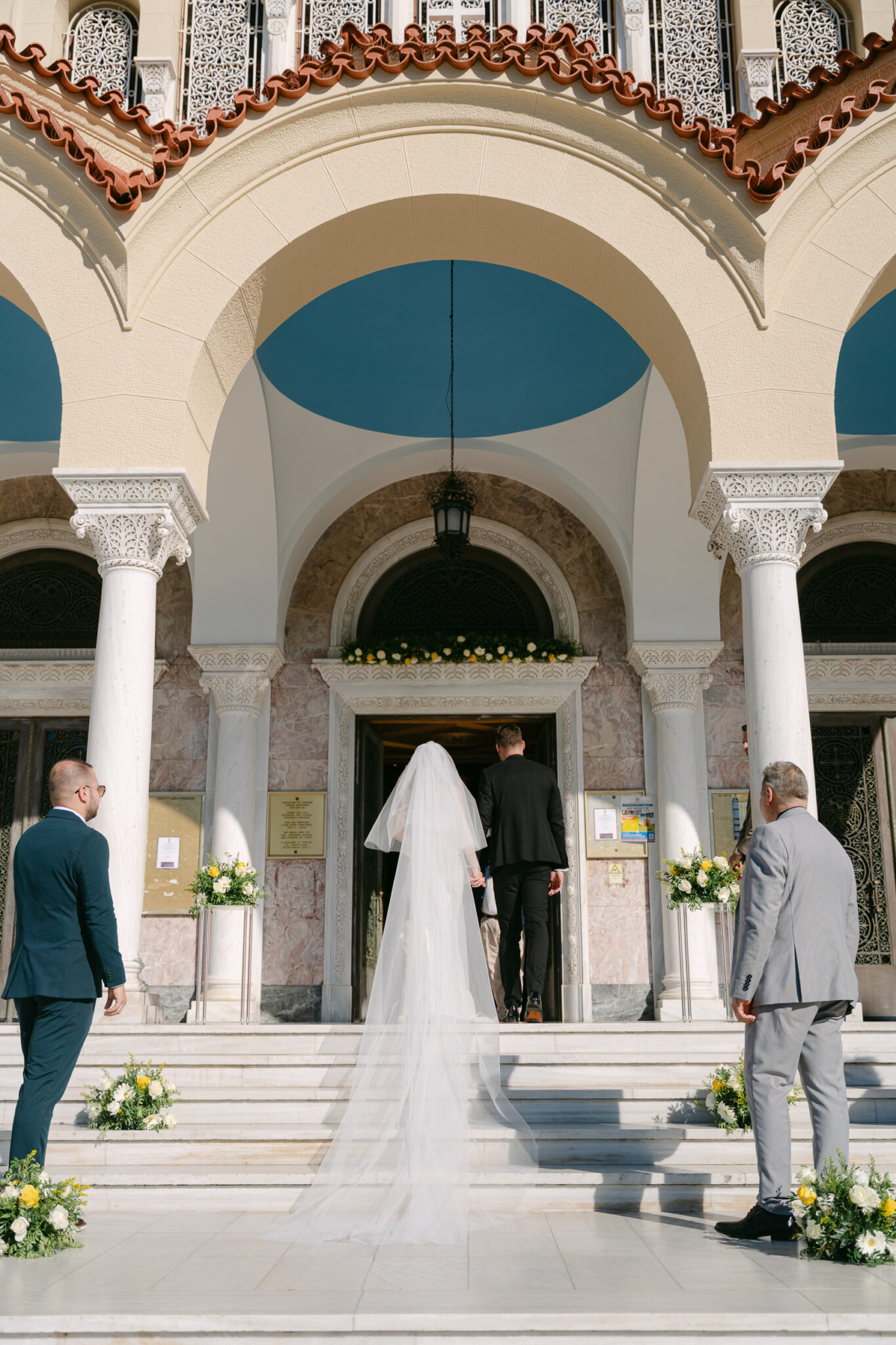
The key difference: no vows
In a Greek Orthodox wedding the couple don't exchange vows. There is no “I do” moment like the ones in films. The sacrament is expressed through gestures and symbols: the rings, the crowns, the common cup, the walk around the table. That is also why it photographs so well: almost every moment is a picture.
The service has two parts: the betrothal and the crowning. It usually lasts about 45 minutes, depending on the church and the priest.
The betrothal: the rings and the candles
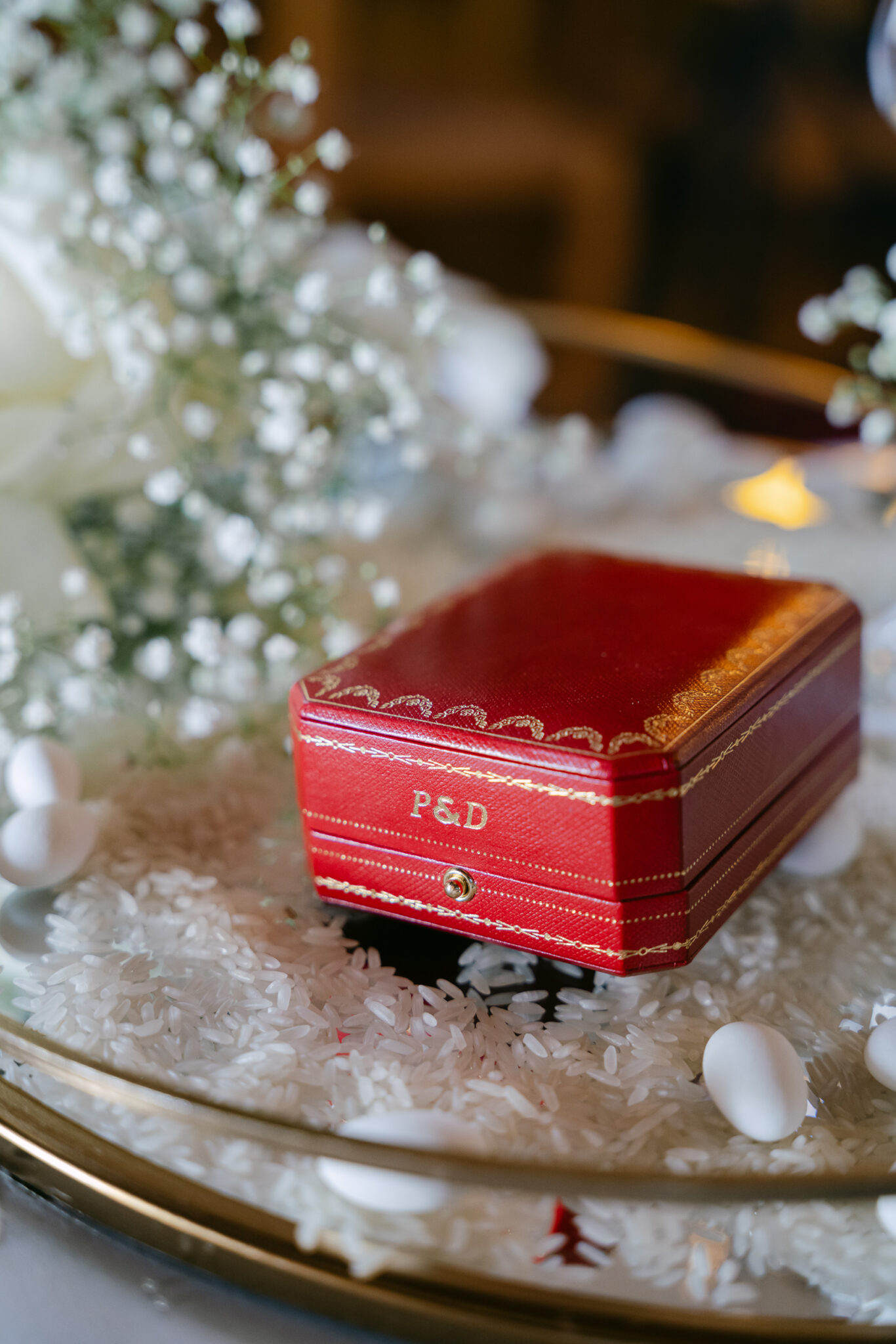
The priest blesses the rings and places them on the couple's right hands. The koumbaros or koumbara, the couple's sponsor, then swaps them between the two of them three times. Lit candles stand beside the couple throughout the ceremony.
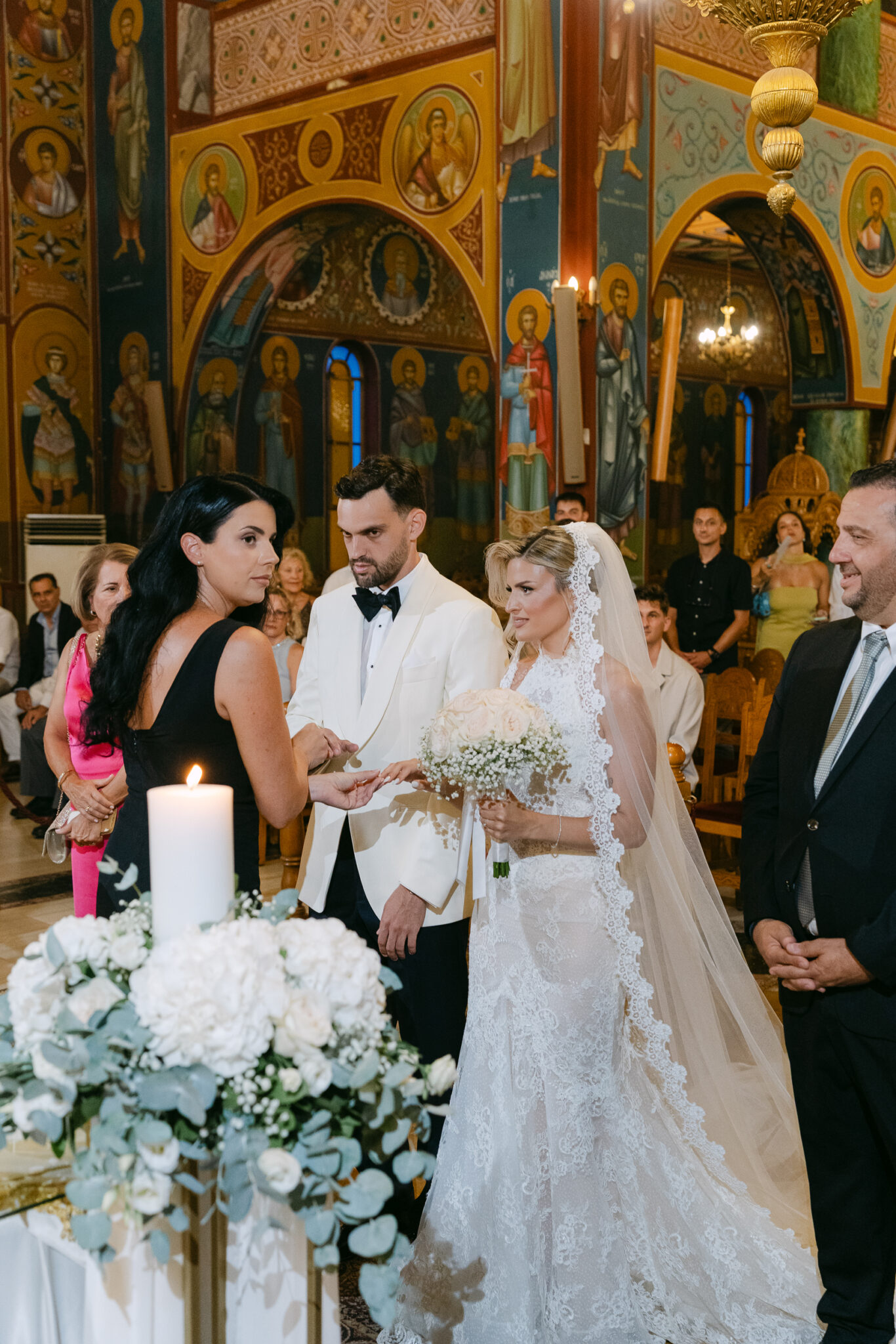
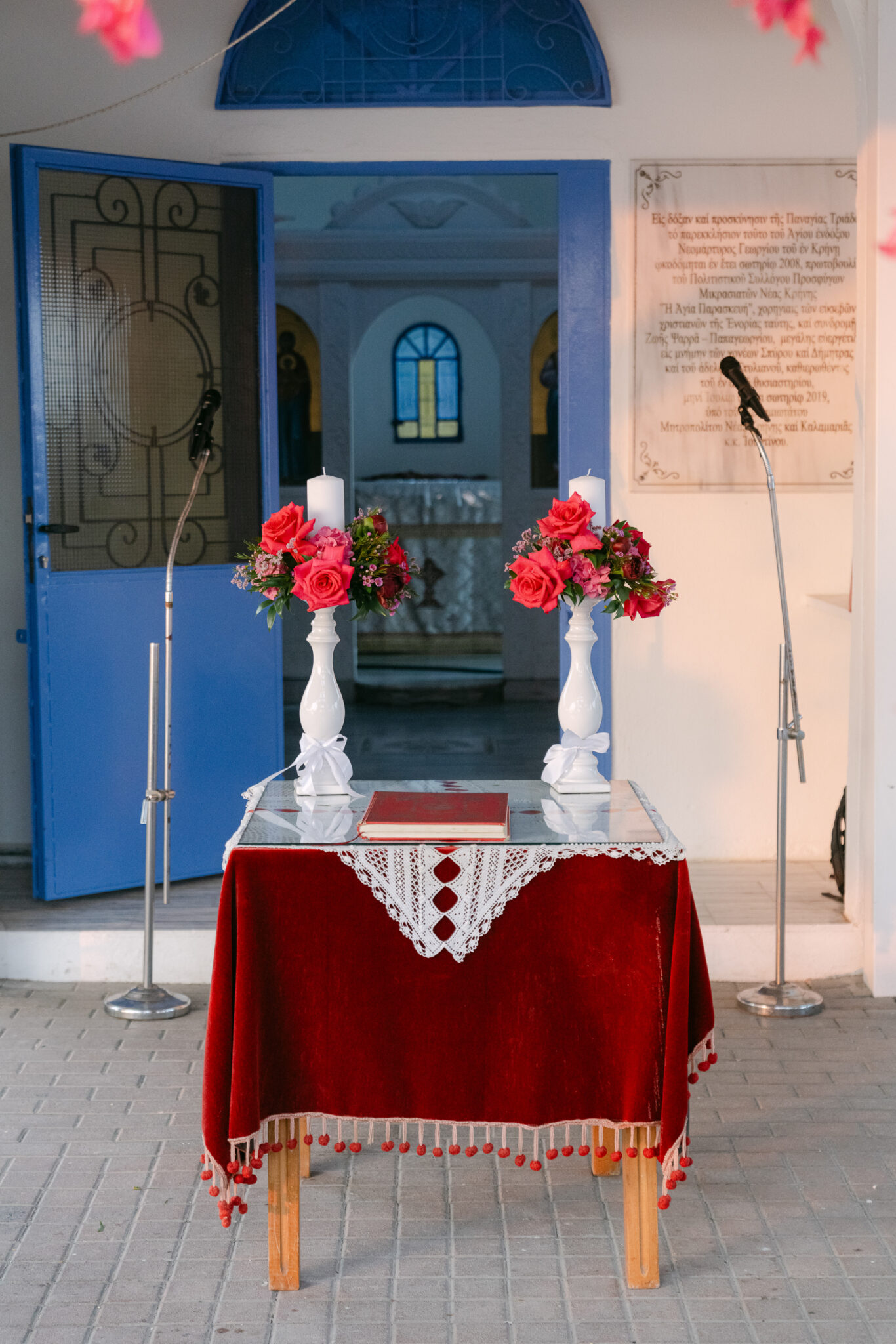
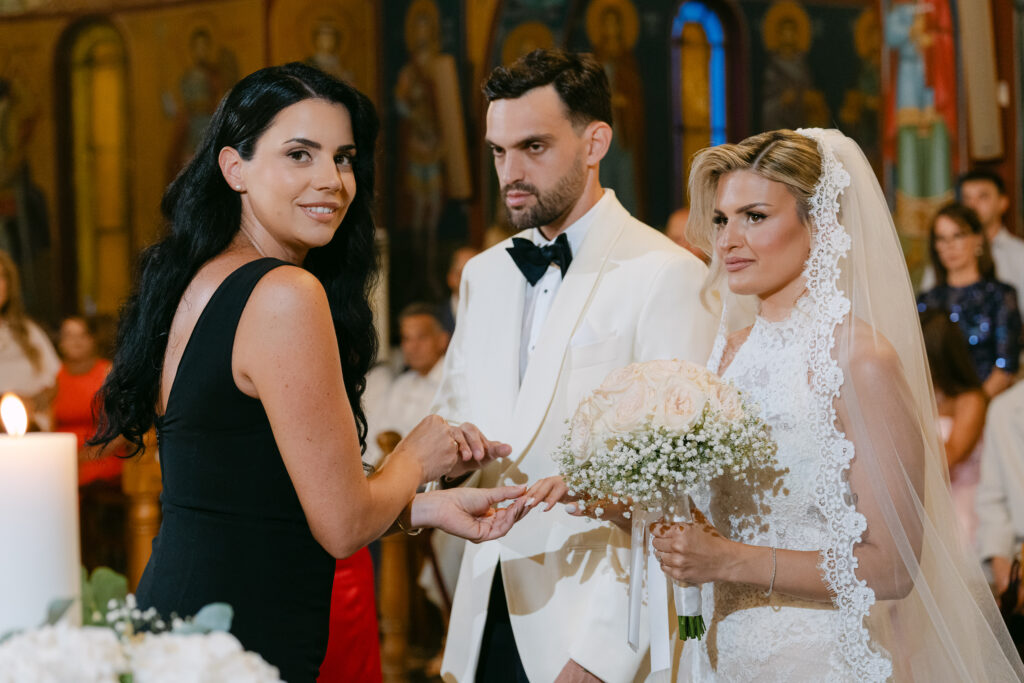
Behind the camera: the exchange of rings happens quickly and up close. It helps if the koumbaros stands where they won't block the couple's hands. We talk this through with you beforehand.
The crowning
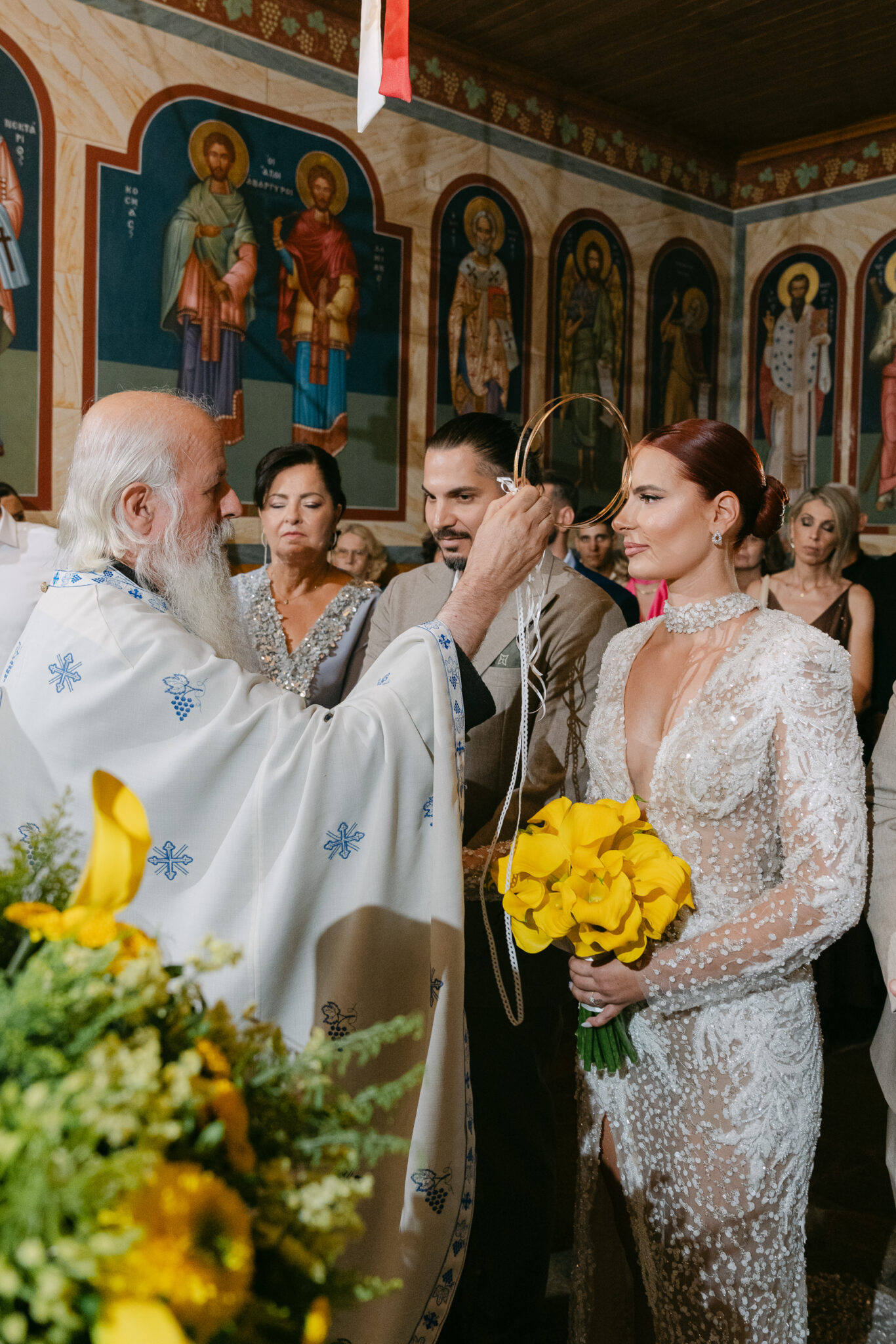
The priest joins the couple's right hands, which stay joined until the end. Then come the crowns, or stefana: two crowns linked by a ribbon, symbolising the couple's union. The priest crowns the couple, and the koumbaros exchanges the crowns three times above their heads.
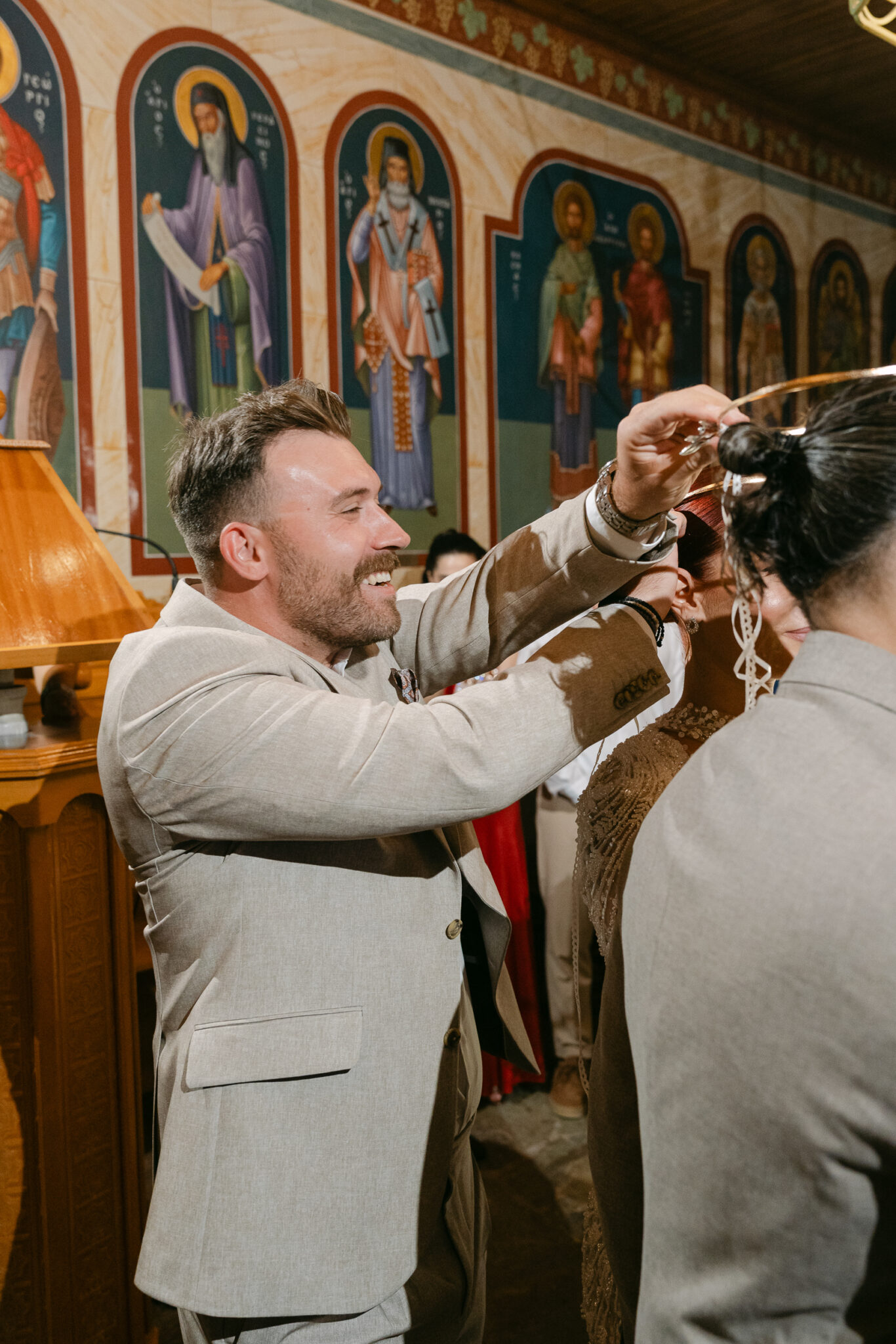
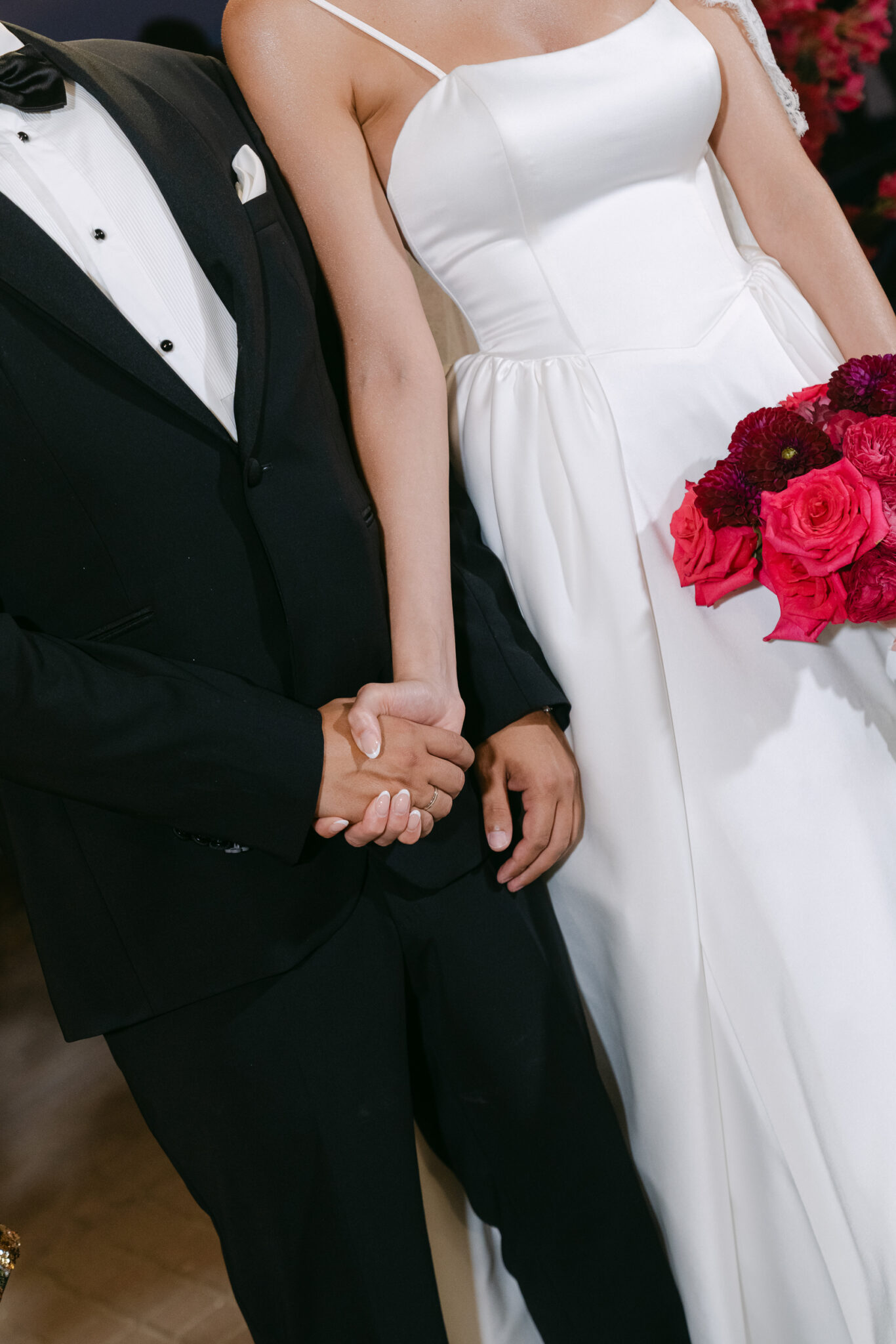
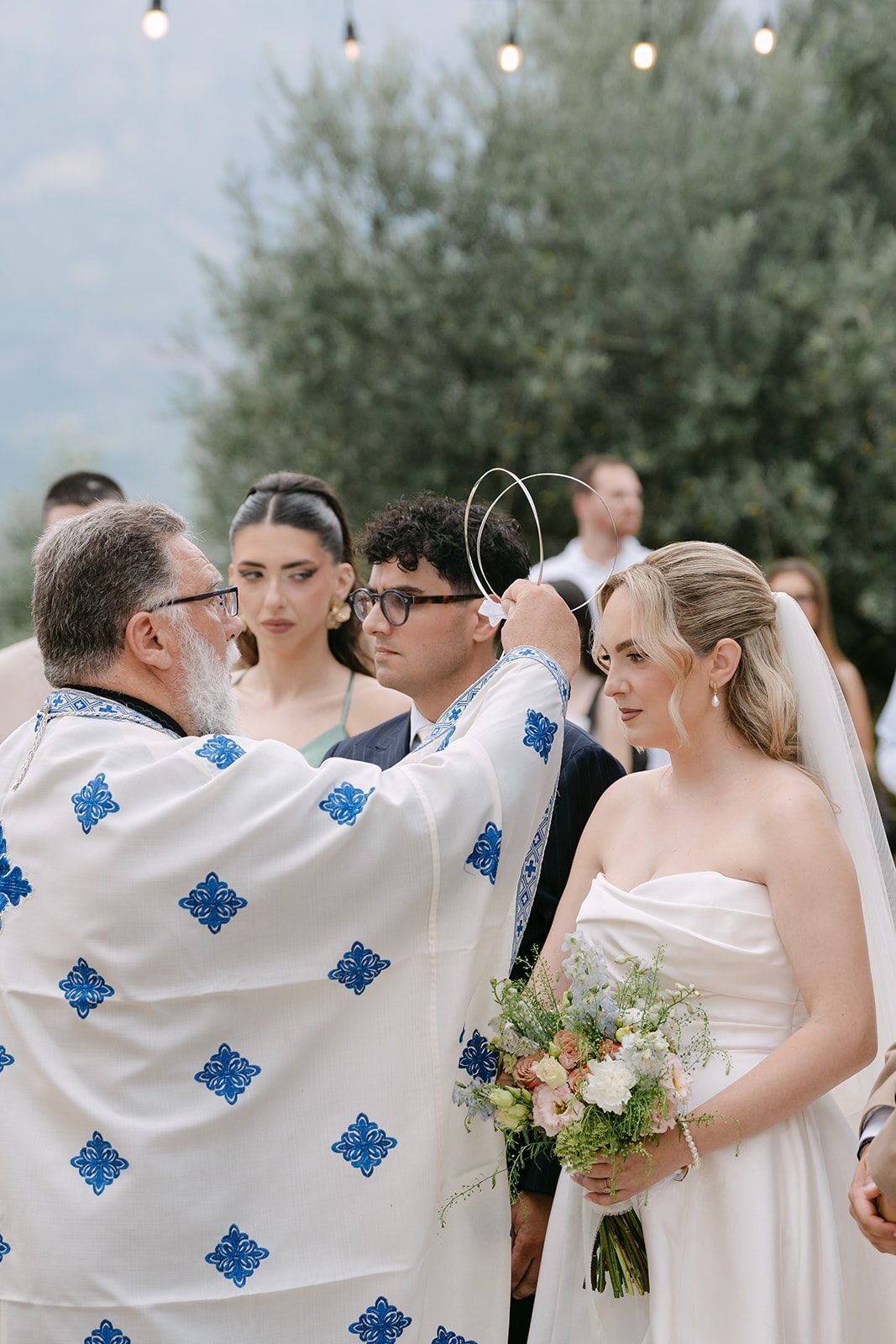
Behind the camera: this is the most iconic moment of a Greek wedding, and it lasts only a few seconds. That's why our position in the church is agreed in advance, so we can see both the crowns and your faces.
The readings, and a custom that isn't a Church custom
The Epistle reading comes from Paul's letter to the Ephesians, followed by the Gospel of the wedding at Cana. At the end of the Epistle comes the line “and let the wife see that she fears her husband”, and many brides step on the groom's foot at that moment. It is a folk custom. The Church does not encourage it, since “fear” here means “respect”. If you'd like to do it, ask the priest first.
The common cup
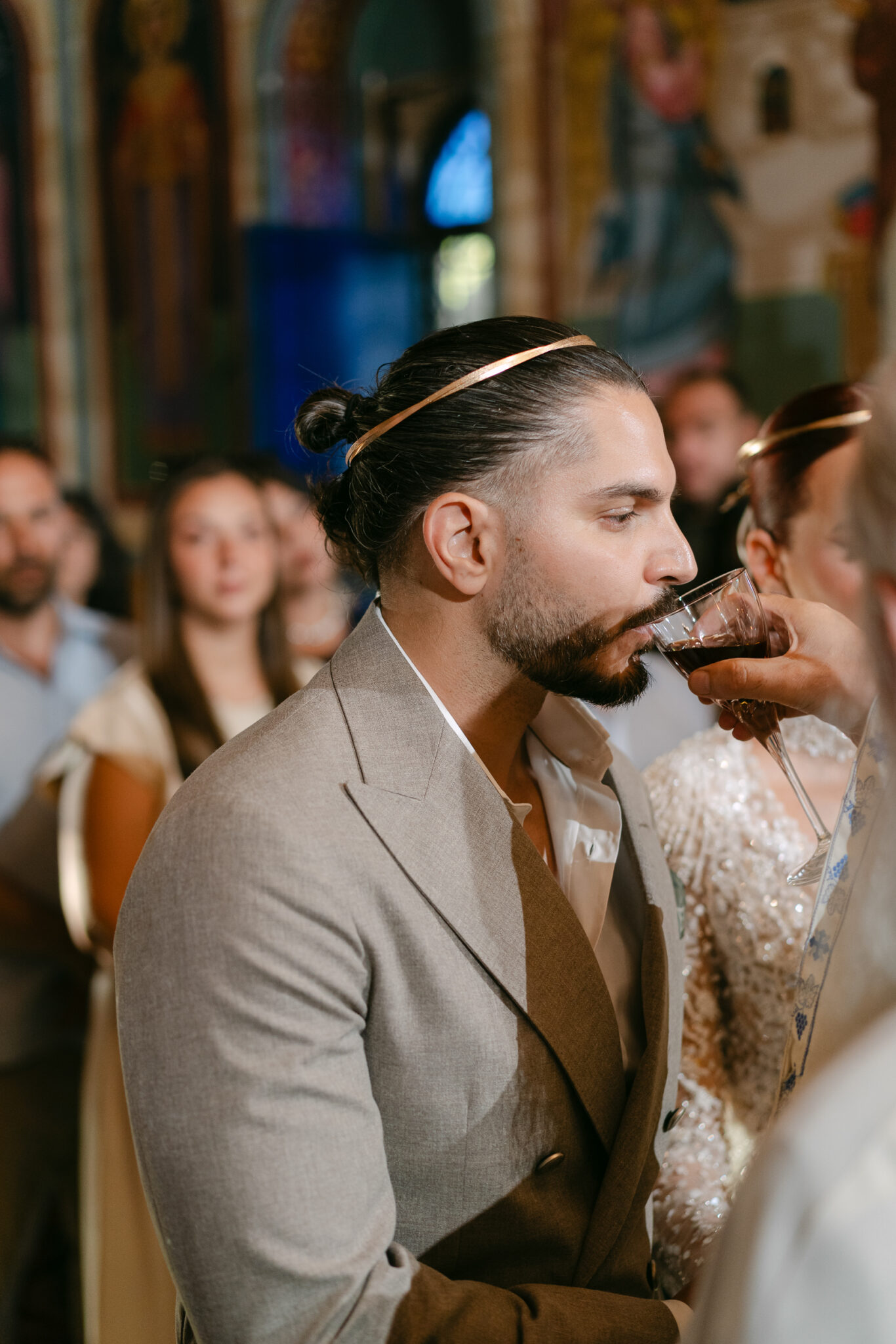
The priest offers the couple wine from a single cup, first the groom and then the bride. It stands for the joys and sorrows they will share from now on. It is not Holy Communion.
The Dance of Isaiah
Holding the Gospel book, the priest leads the couple three times around the table, with the koumbaros following. These are their first steps together as a married couple.
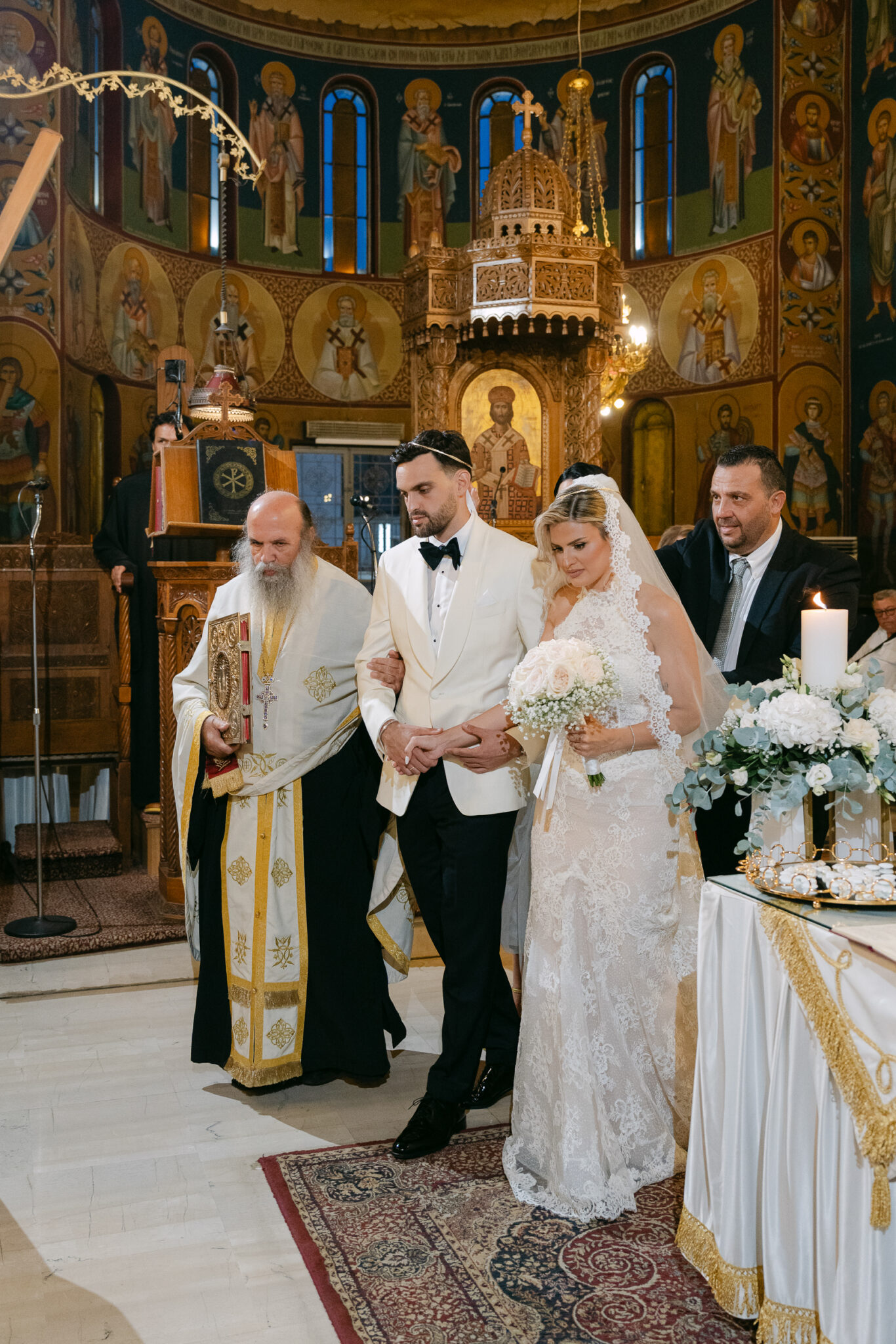
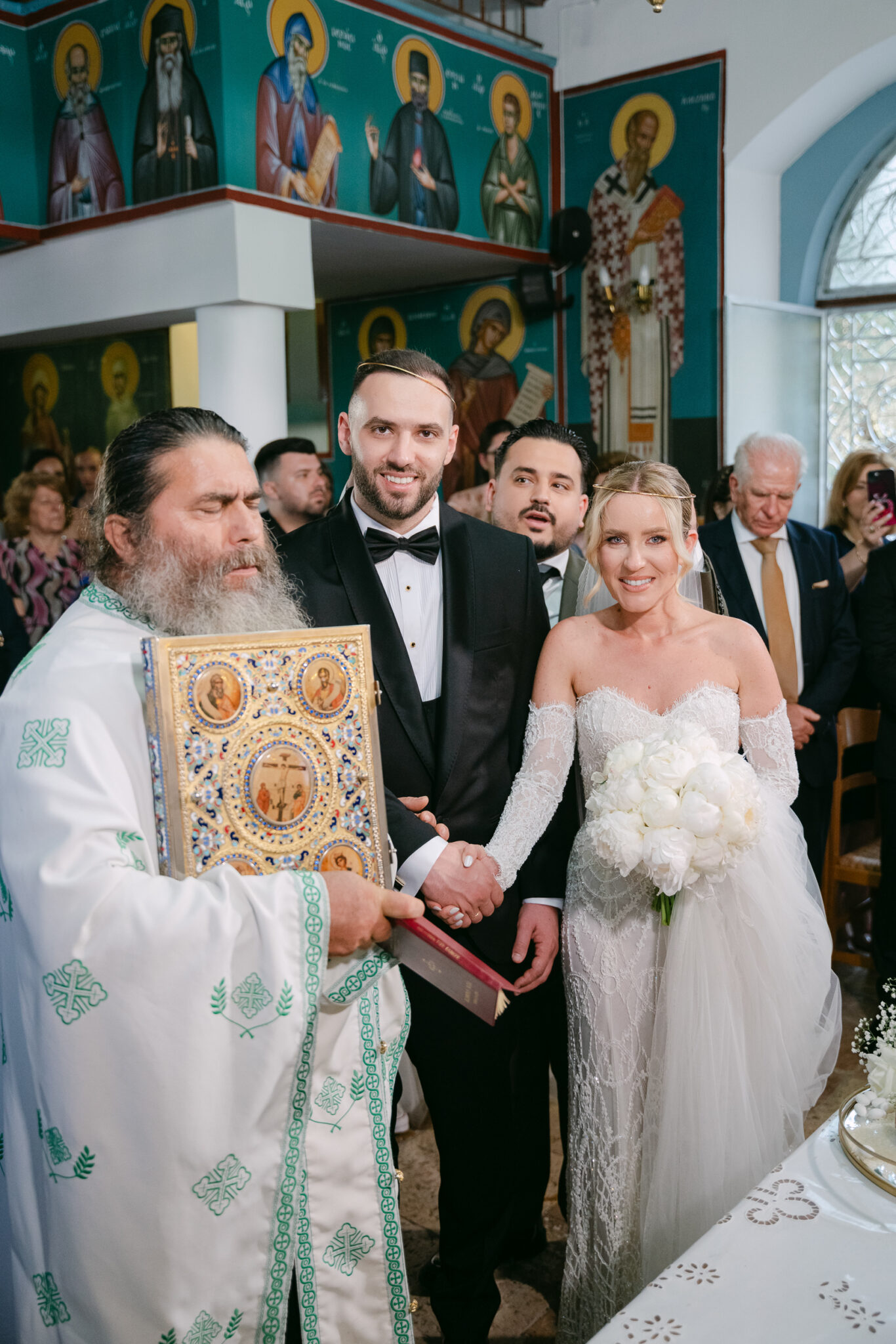
Behind the camera: here the couple, the priest and the koumbaros move together, and the faces change with every circle. It makes for some of the liveliest photos of the ceremony.
The end of the ceremony
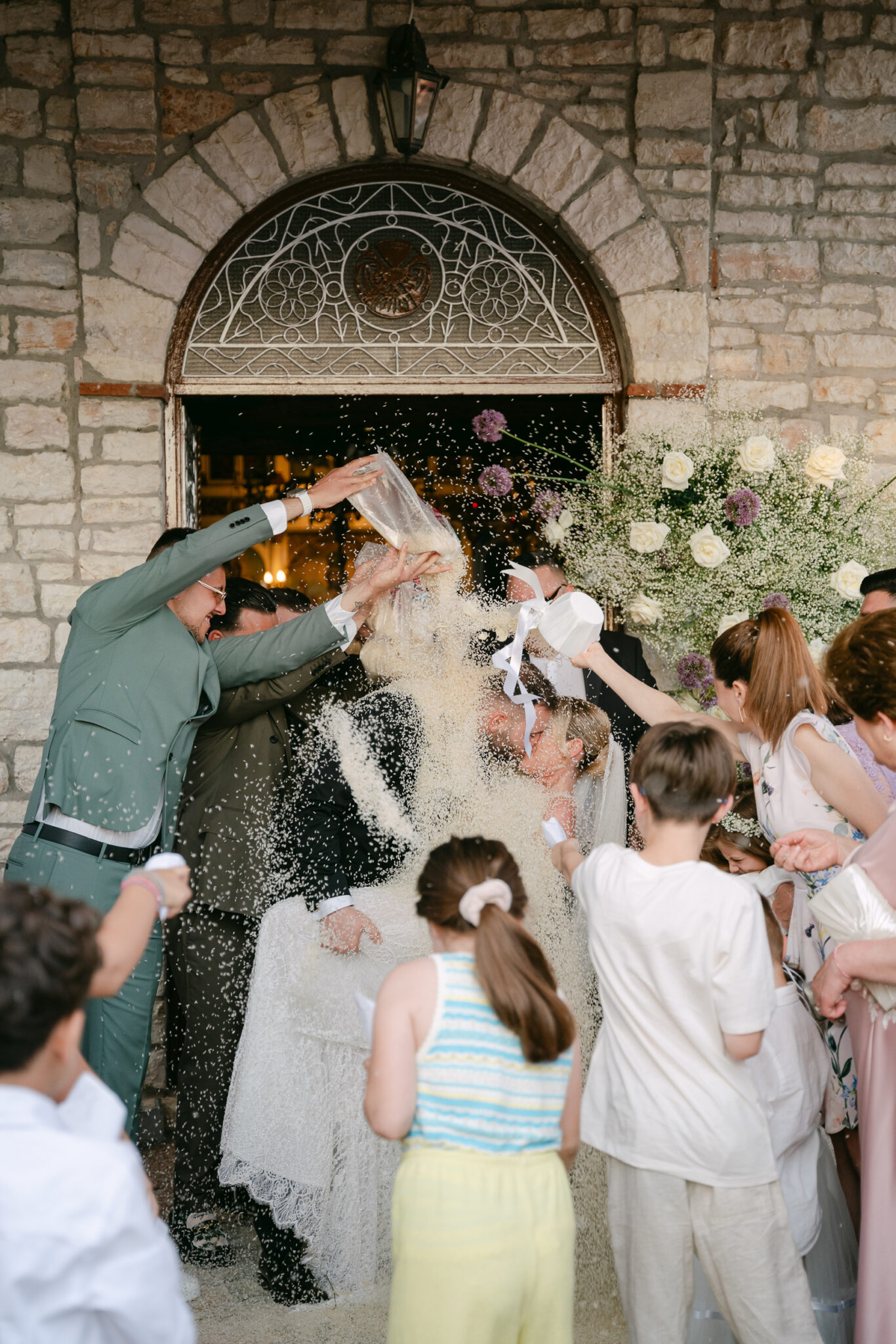
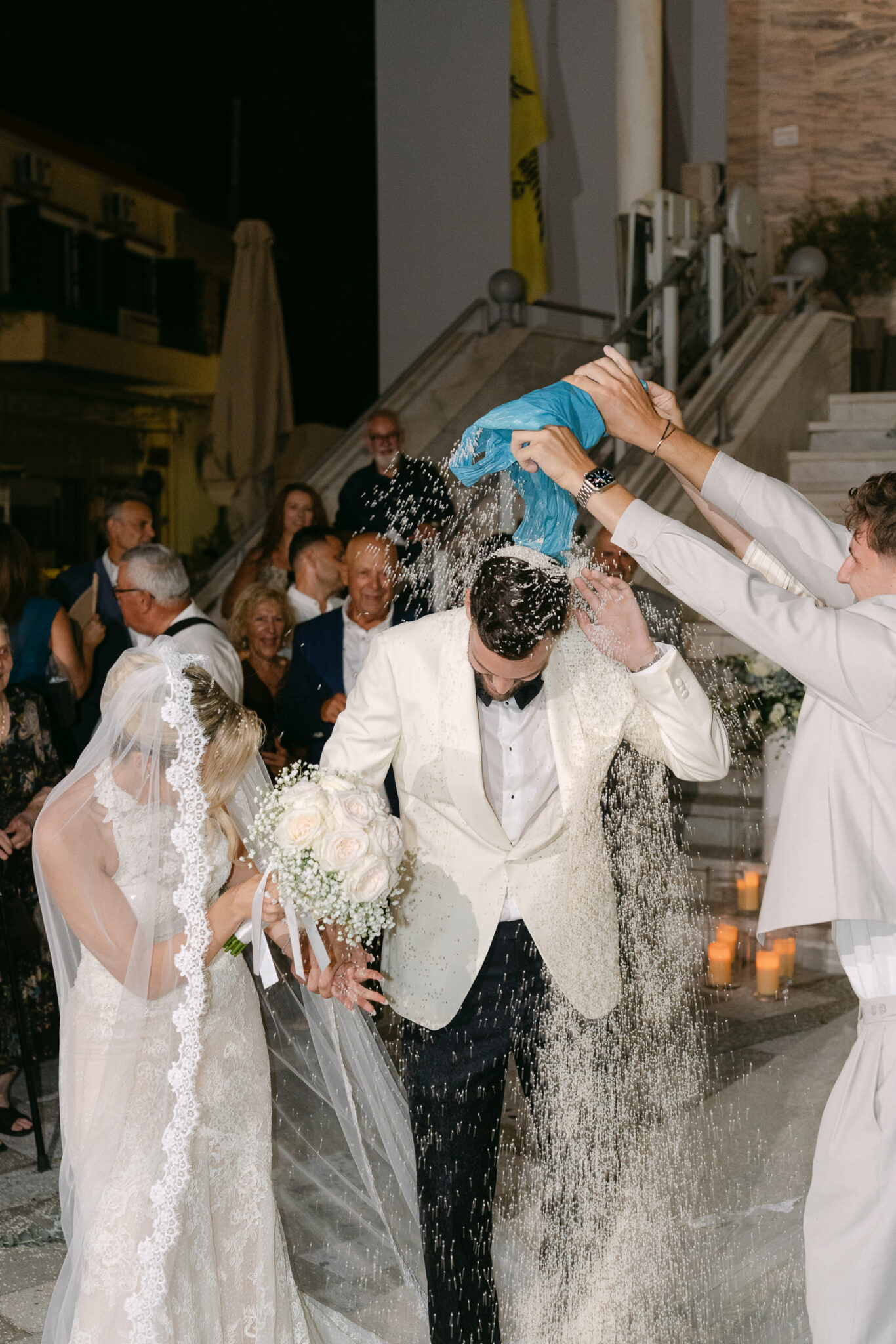
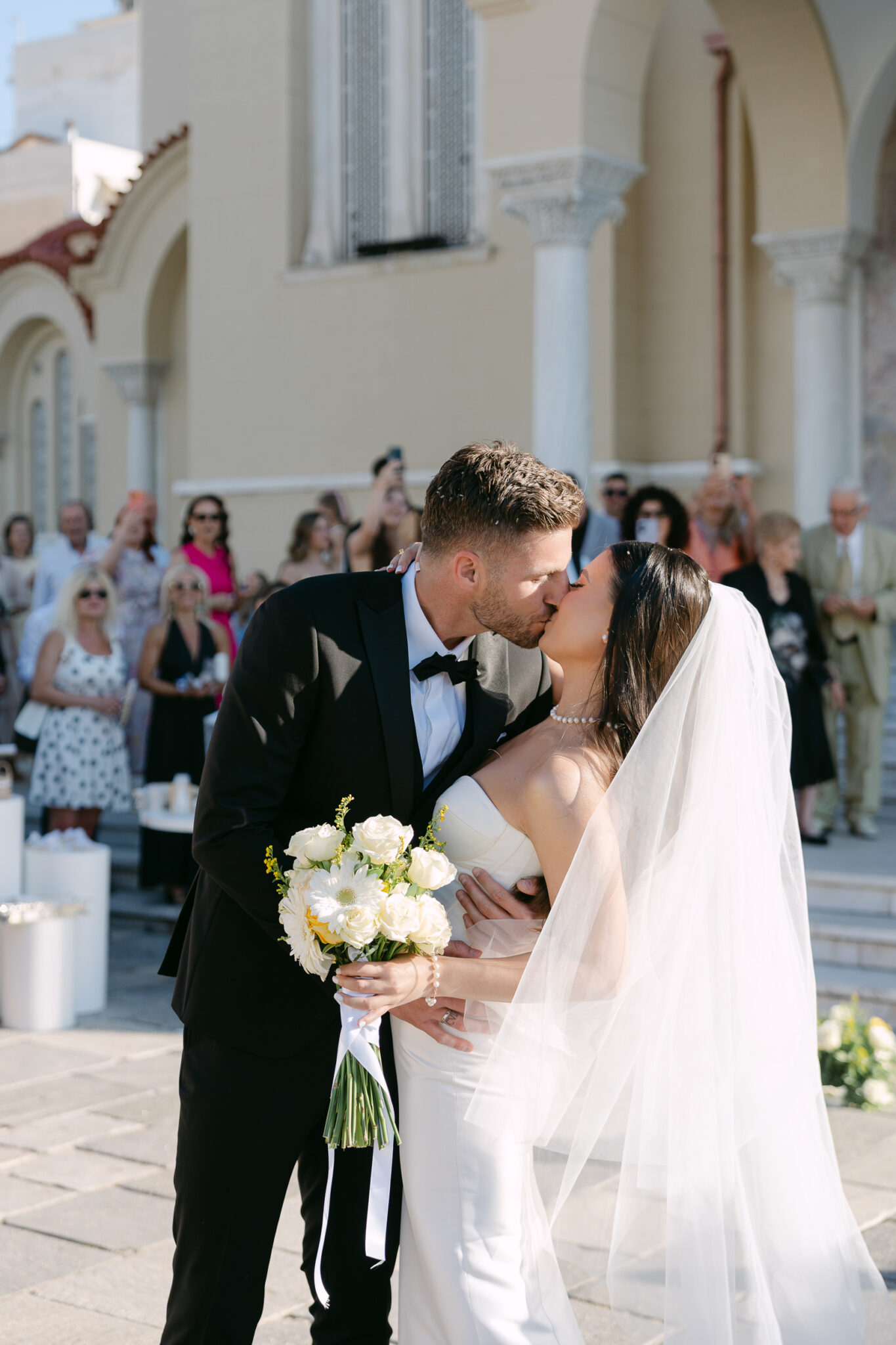
The priest removes the crowns with a final blessing. The couple turn towards their guests and receive their good wishes, usually along with the sugared-almond favours. On the way out, guests throw rice and flower petals. In many churches rice is only allowed outside, so ask beforehand.
If you would like to prepare a wish for this moment, see our wedding wishes.
Photography inside the church: what to know
- The priest has the final word. Rules differ from church to church. We speak with the priest beforehand about where we can stand.
- The sanctuary is not for photographers. We photograph from the nave.
- Discretion. We move quietly and never interrupt the service.
- Family photos afterwards. They are taken once the congratulations are over, at a spot the priest points out.
Practical points for couples from abroad
- One of you must be Orthodox. The other must be a Christian baptised in the name of the Holy Trinity.
- The koumbaros or koumbara must be an Orthodox Christian.
- Some periods are not allowed. Usually Lent and Holy Week, the days before Christmas, 5 and 6 January, 1 to 15 August, 29 August, 14 September and Pentecost. Practice varies by Metropolis.
- Documents. The marriage licence is issued by the local Metropolis. The foreign partner needs translated documents with an Apostille. Start early and talk to the priest at your church.
If you are still looking for a church, see our guide to wedding churches in Patras. If you are thinking of somewhere else in Greece, see our guide to getting married in the Peloponnese.
Customs around the wedding
- The bed. Before the wedding, unmarried friends make the couple's bed and throw money and rice on it. They often place a baby on it too, for good luck.
- The groom's shave. At the groom's house, the koumbaros shaves him before they leave for church.
- Koufeta. Sugared almonds, in an odd number, given to the guests.
Frequently asked questions about the Greek Orthodox wedding
How long does a Greek Orthodox wedding last?
Usually about 45 minutes, depending on the church and the priest.
Do the couple say vows?
No. There are no vows in a Greek Orthodox wedding. The sacrament is expressed through the rings, the crowns, the common cup and the Dance of Isaiah.
What does the koumbaros do?
They swap the rings and the crowns three times and follow the couple during the Dance of Isaiah. They must be an Orthodox Christian.
Can a couple marry in Greece if one partner isn't Orthodox?
Yes, as long as one partner is Orthodox and the other is a baptised Christian. For details, ask the priest and the local Metropolis.
Is photography allowed in the church?
Usually yes, discreetly and outside the sanctuary. Rules differ from church to church, which is why we always discuss them with the priest beforehand.
Getting married in Greece?
Tell us the date, the church and where you are travelling from. We'll help you plan the day and photograph every moment of the ceremony.
Photographs: Dimitris Stergiou and the studio team