Insights · A guide to baptism
Many families who live abroad choose to baptise their child in Greece: in the grandparents' village, in the church where the parents were married, with the whole family there. It is a beautiful decision, but it takes some organising from a distance.
This guide covers what you need for a christening in Greece when you live abroad: the godparent, documents, dates, your child's name, and how we plan the photography when the parents are in another country.
Contents (7)
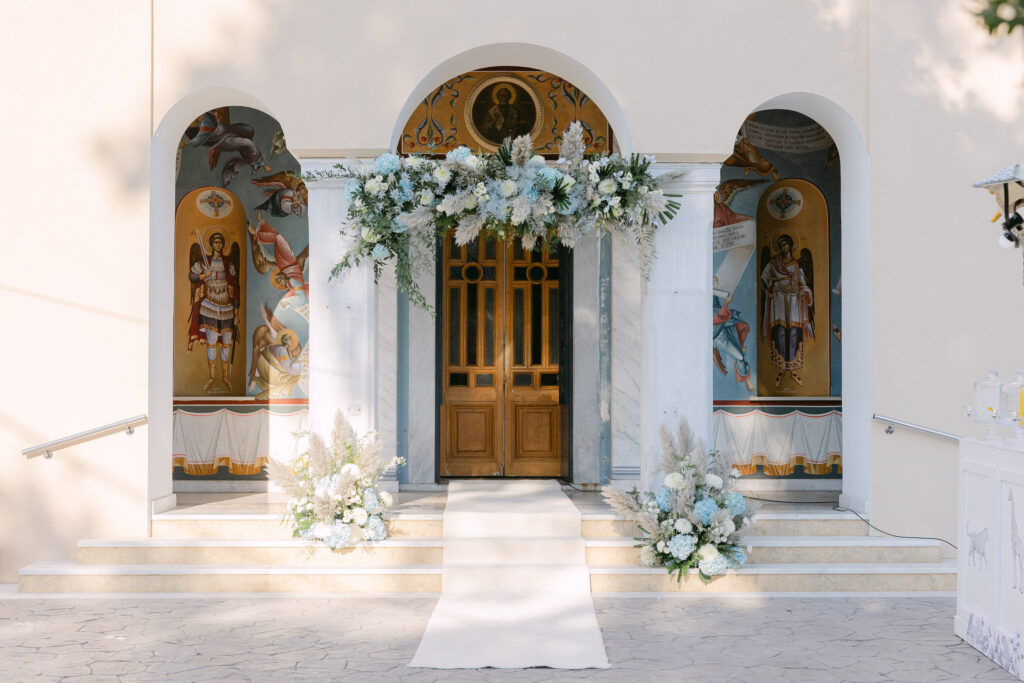
Start with the church and the priest
The first step is to book the church and a date with the parish priest, and to do it early. If the baptism takes place in a different parish from the one the family belongs to, the priest will tell you which documents need to be transferred. Details vary from one Metropolis to another, so the priest is always the most reliable source.
Baptisms are not performed during certain periods of the year. These usually include:
- Great Lent, from Clean Monday to Holy Saturday;
- 18 to 25 December, and 5 and 6 January;
- Pentecost and the Fast of the Holy Apostles;
- 1 to 15 August, 29 August and 14 September.
If you're travelling, confirm the date with the church before you book flights.

The godparent
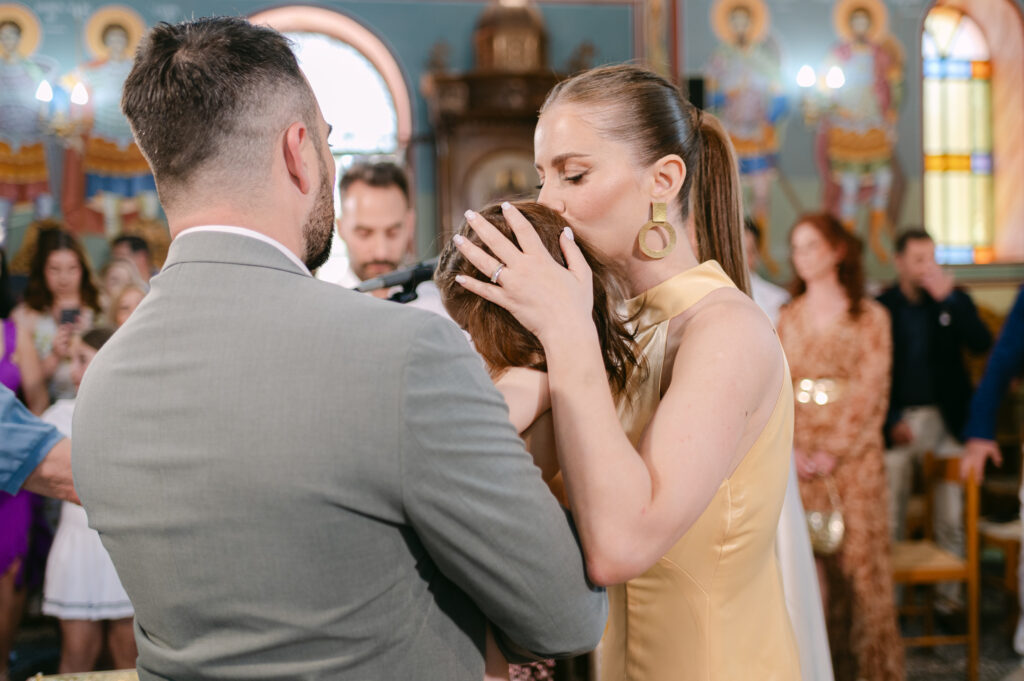
The godparent (nonos or nona) must be an Orthodox Christian. If the godparent lives abroad or was baptised there, the priest may ask for a document that proves it, such as a baptism certificate. Ask early, so there is time to track it down.
The parents don't necessarily have to be Orthodox. If they aren't, the priest will explain what is needed, usually a signed declaration from the parents.


Your child's name and the paperwork
One thing that confuses many families: the baptism does not, on its own, give your child a name in the civil registry. The name is declared separately, with a naming declaration by the parents. It can also be done online at gov.gr.
- If your child was born abroad, their birth must first be registered in Greece. This is usually done through the Greek consulate, using the birth certificate from the country where you live, with an Apostille and an official translation.
- The baptism declaration is made after the ceremony and can also be done online.
- Start months ahead. Consulate procedures take time, and you don't want to be chasing them in the week of the christening.
Note: procedures change from time to time. For your own case, confirm everything with your consulate and the priest of your church.
What the godparent brings
Traditionally, the godparent provides the child's clothes and shoes, the oil cloths, the oil, the candle, the cross, and the martyrika (witness favours). The parents usually take care of the invitations and the favours for the guests. That said, customs vary from place to place and from family to family.
If you live abroad, many of these things can be found or ordered in Greece, so you don't have to carry them on the plane.


The ceremony, for guests who don't speak Greek
If friends or relatives who don't speak Greek are coming to the christening, a short explanation helps them understand what they are seeing. The service usually lasts about thirty to forty minutes:
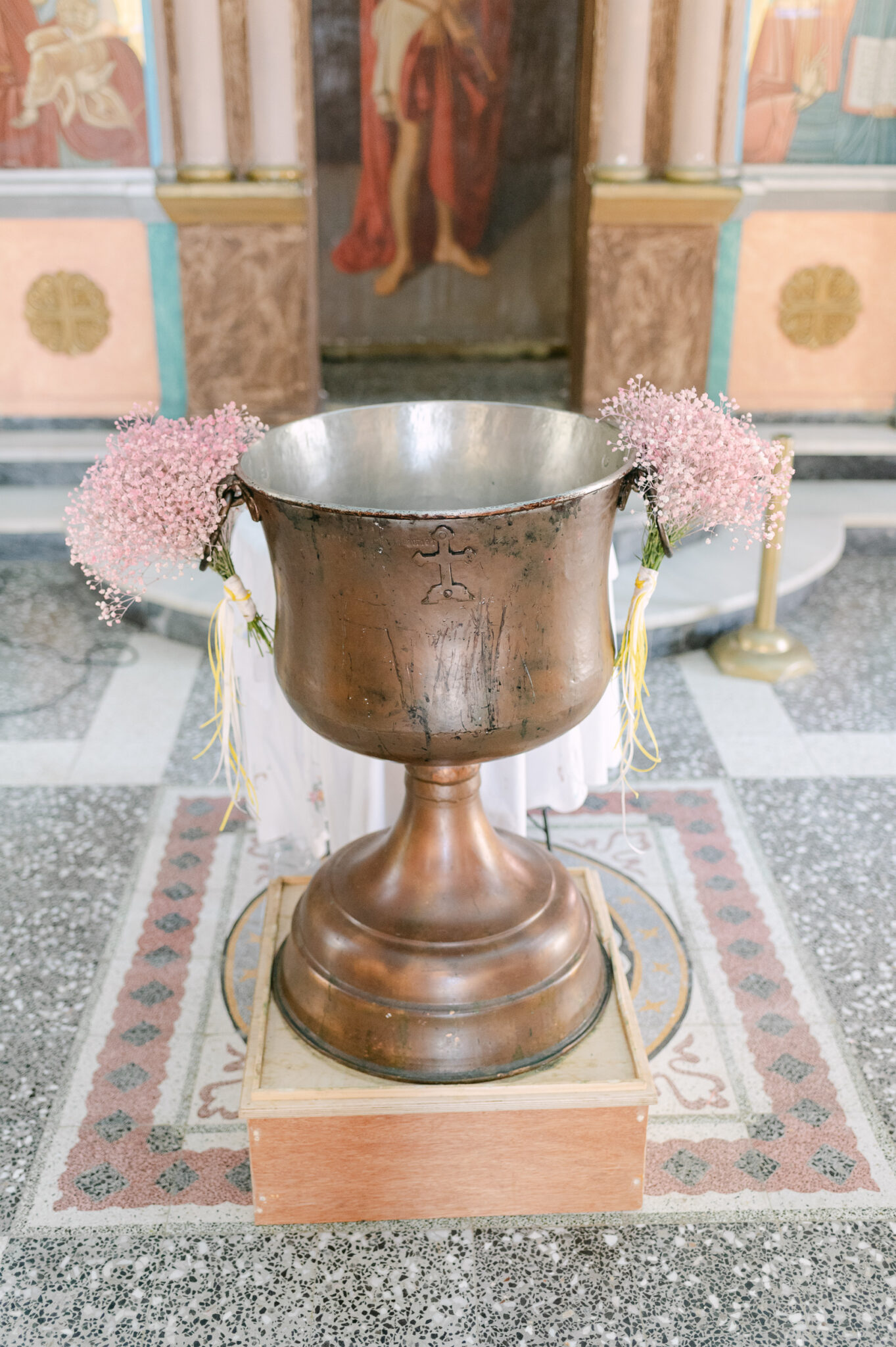
- At the entrance, the godparent recites the renunciation and the Creed on the child's behalf.
- The priest blesses the water and the oil, and the child is anointed.
- The child is immersed three times in the font, and the godparent receives them in a white sheet.
- Then come chrismation and the cutting of a few locks of hair in the shape of a cross, and the child is dressed in white with their cross.
- Then three circles around the font, with the candle.
- At the end, the martyrika are handed out.


For more, see our guide to baptism photography.
Photography when you live far away
When a family lives in another country, the christening is often the only time in the year that everyone is together. That makes it all the more important to photograph it well.
- We plan from a distance. We talk with you before you travel about the schedule, the church and the reception.
- We start at home, if possible. At the grandparents' house or wherever you are staying, as long as the distances between locations allow it.
- Family photos with everyone. Grandparents, aunts, uncles and cousins you rarely see. Tell us in advance which groups you want, so no one is missed.
- Photography and video. We can cover the day with both, so that those who couldn't make it can still share in it.


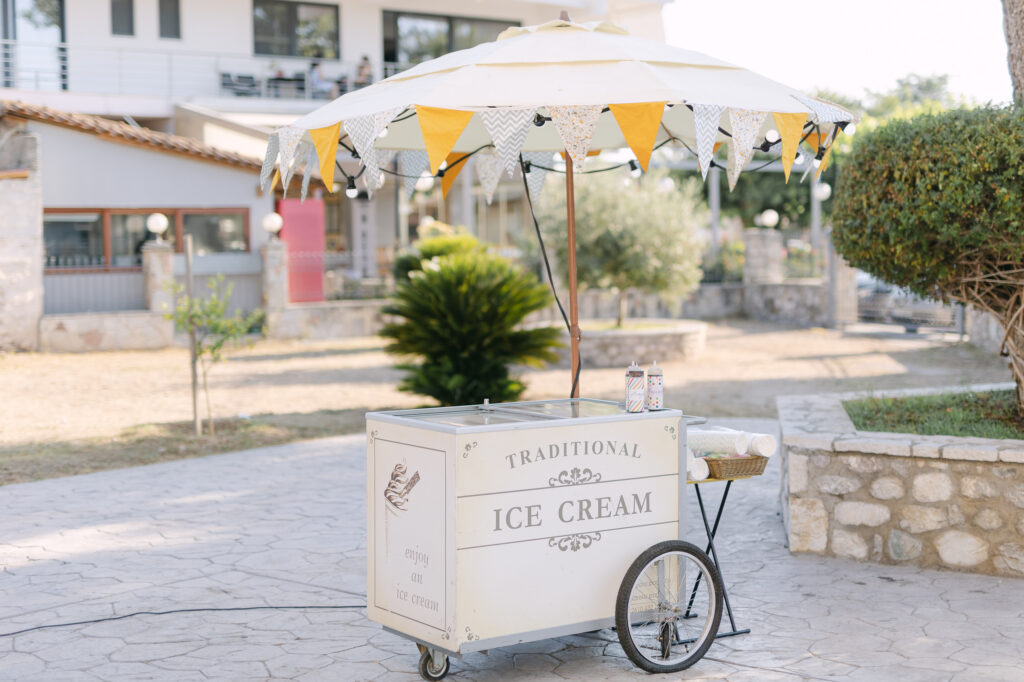
For the words you will say to the child and the parents, see our christening wishes.
Frequently asked questions about a christening in Greece from abroad
Do the parents have to be Orthodox?
Not necessarily. The godparent, however, must be an Orthodox Christian. For your own case, talk to the priest.
Does the baptism give the child a name?
Not in the civil registry. The name is declared separately by the parents, with a naming declaration, which can also be done at gov.gr.
Our child was born abroad. What do we need to do?
Usually the birth must first be registered in Greece, through the Greek consulate. Ask your consulate which documents you need.
How early should we book the church?
As early as possible, especially if you are travelling in the summer months. Confirm the date before you book flights.
How long does the ceremony last?
Usually about thirty to forty minutes, depending on the church and the priest.
Christening your child in Greece?
Tell us the date, the church and where you are travelling from. We'll plan the day with you from a distance and send you a proposal for photography, video or both.
See also how much a baptism photographer costs.
Photographs: Dimitris Stergiou and the studio team