Insights · The meaning of marriage
Marriage is one of humanity’s oldest institutions: two people deciding to share their lives. In a Greek Orthodox wedding, that decision isn’t spoken in vows. It is expressed through symbols.
This piece looks at what marriage means and what each symbol of the ceremony stands for: the rings, the crowns, the common cup, the Dance of Isaiah, the koumbaros, rice and sugared almonds. For the order of the service, step by step, see our guide to the Greek Orthodox wedding ceremony. Here we focus on the meaning.
Contents (10)
What marriage means
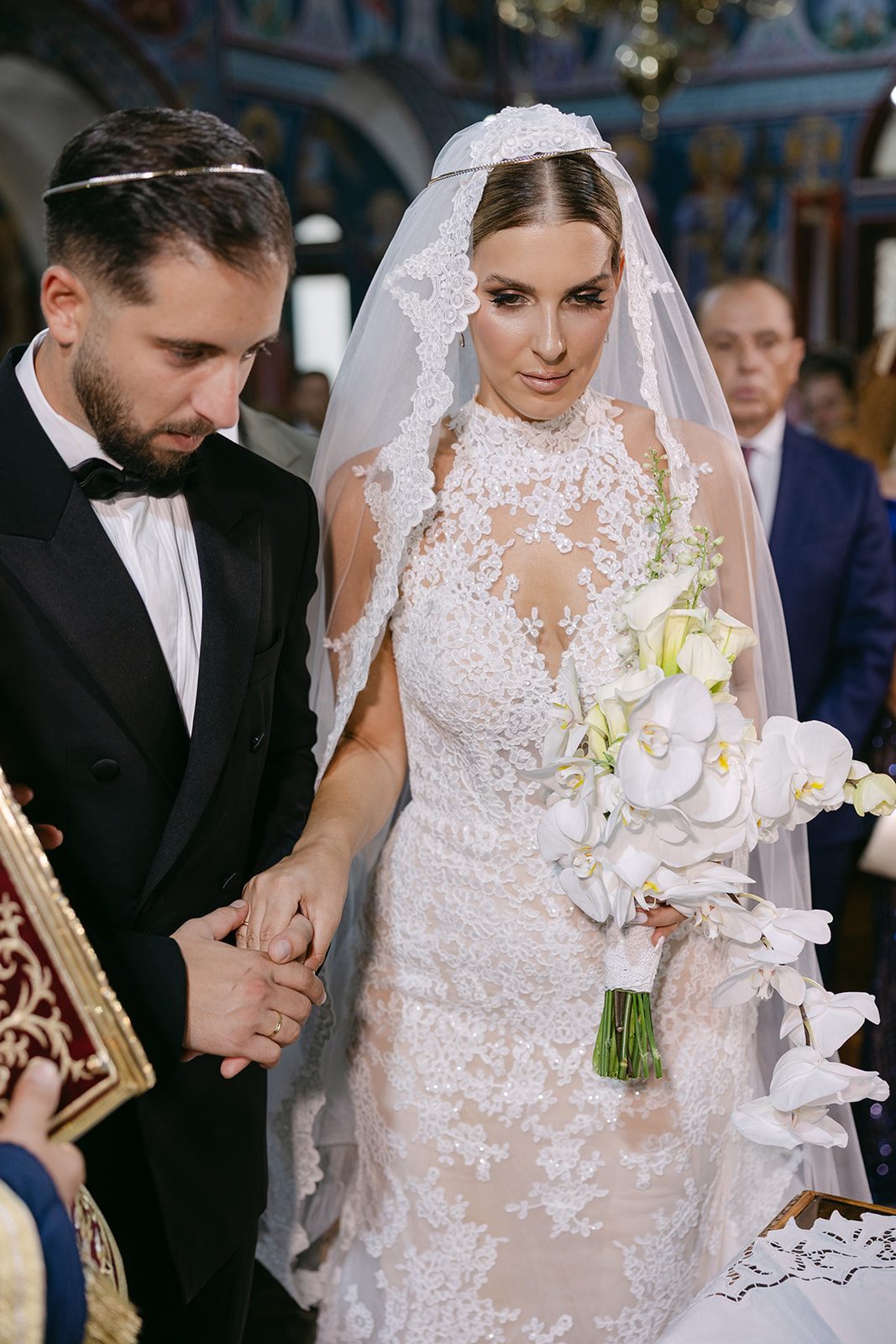
Love and companionship sit at the heart of every marriage. It binds two people to share their lives closely and to hold each other up through the ups and downs. It is a partnership built on respect, understanding and trust.
In a fast-changing world, marriage offers something steady: a sense of “us” that doesn’t depend on the mood of the day. That doesn’t mean there will be no hard times. It means you face them as a team, by talking openly and learning to compromise. And marriage reaches beyond the couple: it brings together two families and two circles of friends, who from that day on have something to celebrate together.
A ceremony without vows
If you have only seen weddings in films, you might be waiting for the “I do”. In a Greek Orthodox wedding, the couple don’t say vows. The union is expressed through gestures and objects, each with its own meaning, which is why almost every moment of the service is also a picture.
The service has two parts: the betrothal, with the rings, and the crowning. Throughout, candles burn beside the couple, a symbol of the light that goes with them into their new life.
The rings and the betrothal
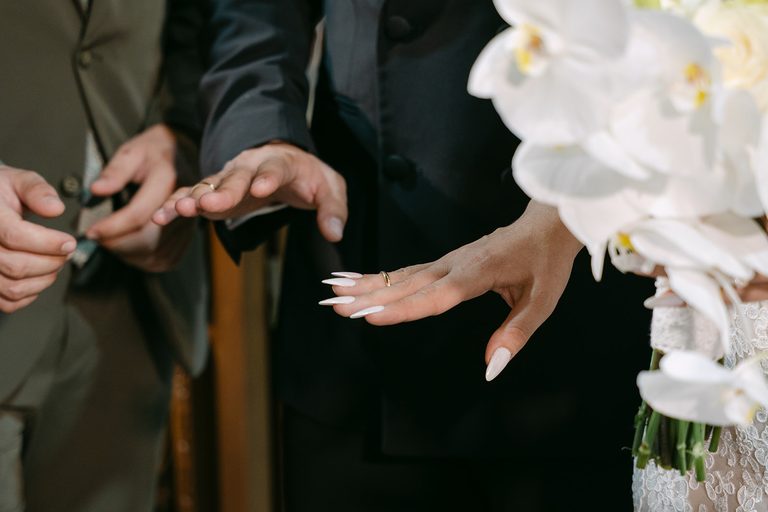
The betrothal is the commitment, the promise that the two now belong to each other. The priest blesses the rings and places them on the couple’s right hands, the hand of blessing. The koumbaros then swaps them between the couple three times, in the name of the Holy Trinity.
The exchange has a more human meaning too: whatever one lacks, the other makes up for. A ring, a circle with no beginning and no end, is a reminder that this love has no expiry date. For many couples the rings wait in a little box all morning, as they did at Angelos and Katerina’s wedding, in their velvet box (their story).
The crowns
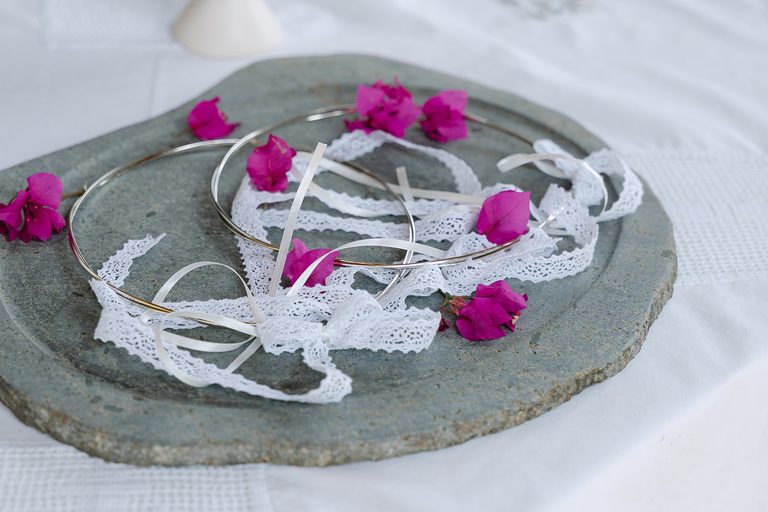
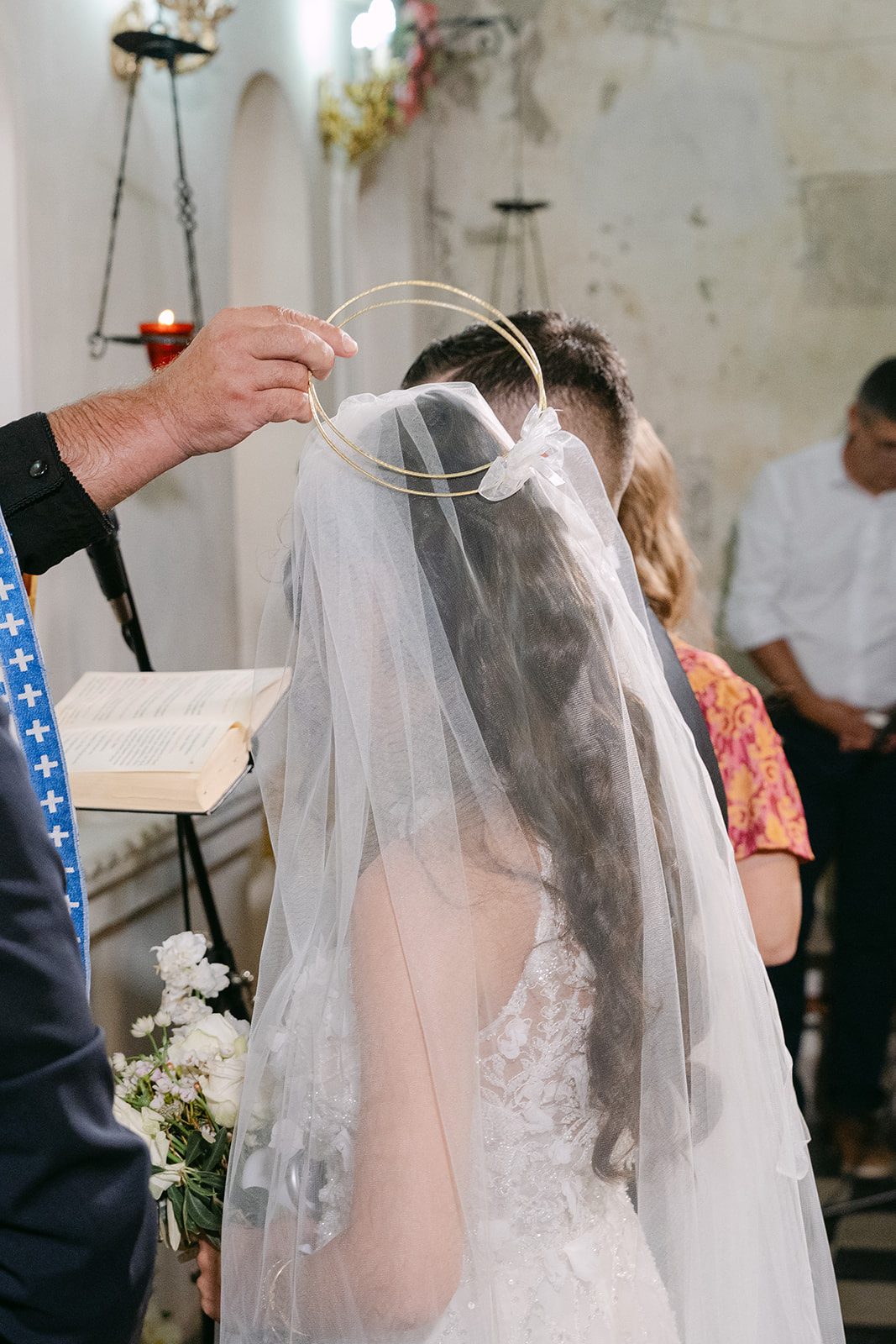
The crowns, or stefana, are the best-known symbol of a Greek wedding. There are two, joined by a ribbon, showing that from now on the two lives are tied together. The priest crowns the couple, and the koumbaros swaps the crowns three times above their heads.
Traditionally, the crowning carries two meanings. The couple become the “king and queen” of their own home, with the honour and the responsibility that brings. And the crowns are a reminder of sacrifice: a love that gives without keeping count. After the wedding, many couples keep their crowns at home in a special display case, the stefanothiki.
The common cup
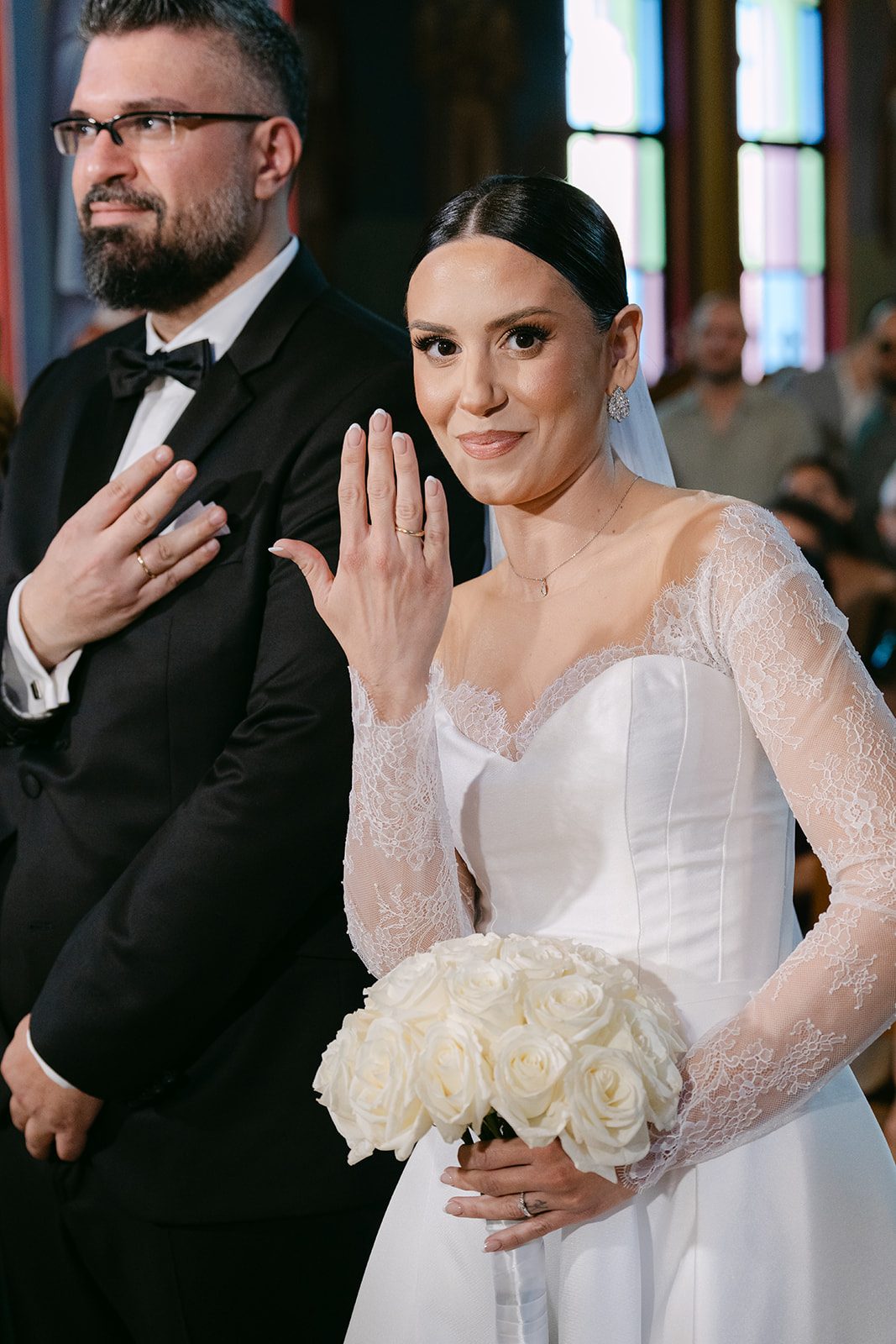
The priest offers the couple wine from the same cup. It recalls the wedding at Cana, where water was turned into wine, and it stands for everything they will now share: joys and sorrows, the sweet and the bitter. It is blessed wine, not Holy Communion.
The Dance of Isaiah
Holding the Gospel, the priest leads the couple three times around the table, with the koumbaros following behind, holding the ribbon of the crowns. The name comes from the hymn sung at that moment, which begins “Isaiah, dance with joy”.
These are the couple’s first steps together as a married pair. The circle stands for eternity, and the priest leading the way shows that the couple don’t walk alone. In many places guests throw rice or sugared almonds during the dance, if the church allows it.
The koumbaros or koumbara
The koumbaros isn’t simply a witness. They are the couple’s sponsor in the faith: they exchange the rings and the crowns and follow in the Dance of Isaiah, which is why they must be an Orthodox Christian. Usually it is someone very close to you, and the bond with your family carries on for years after the wedding.
Rice, koufeta and good wishes
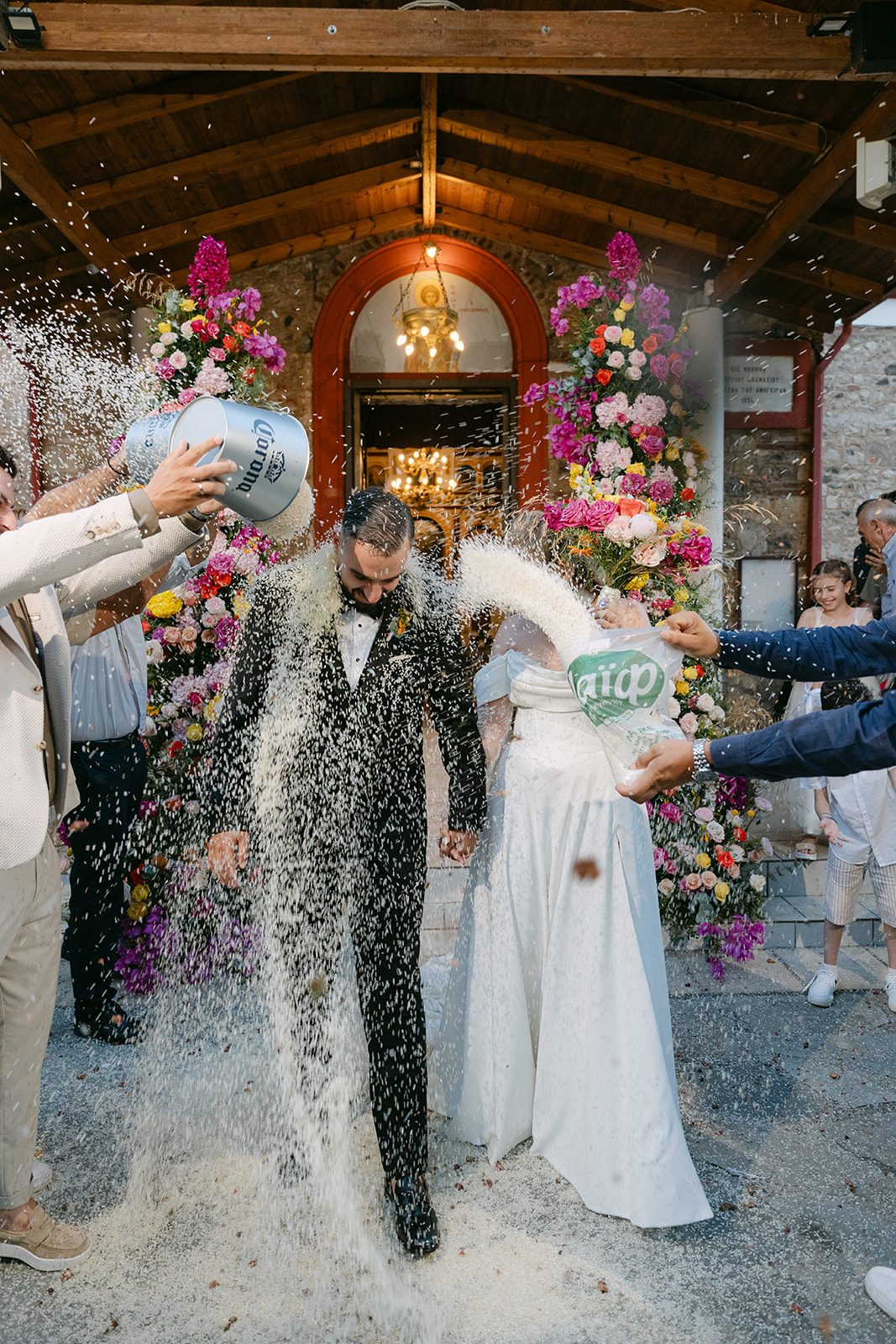
As the couple leave the church, guests shower them with rice, often with rose petals too. Rice is a wish for the couple to put down roots and to have plenty in life. Angelos and Katerina walked out under a shower of rice (their story), and Vasilis and Ifigeneia were showered with rice as they came out (their story).
Koufeta are sugared almonds, handed out to guests in odd numbers along with the couple’s thanks. An odd number can’t be divided, just like the couple, and the almond under the sugar is a reminder that life is both bitter and sweet. If you need words for a card, see our wedding wishes, and for more customs around the day, our page on Greek wedding traditions.
Why the symbols matter in photographs too
When you know what each gesture means, you experience it differently, and that shows. The most moving photographs of the ceremony are usually the simplest: hands as the rings are exchanged, the crowns above your heads, a glance during the Dance of Isaiah. That is why, during the service, a good photographer stays discreet but close to the moments that matter, as far as each church allows.
If you are having a civil wedding, the meaning of the decision is the same, and the ceremony has a simplicity of its own: see our guide to a civil wedding. For the paperwork for a church wedding, see the marriage licence guide.
The rings, the crowns and the common cup say in pictures what marriage says with a whole life: from now on, together.
Frequently asked questions about the meaning of marriage
What does marriage mean?
Marriage is two people deciding to share their lives, with love, respect and trust. In a Greek Orthodox wedding, that union is expressed through symbols rather than vows.
What do the wedding crowns symbolise?
That the two lives are now bound together. Traditionally the couple become the “king and queen” of their home, and the crowns recall a love that gives without keeping count.
Why are the rings worn on the right hand?
In the Orthodox tradition the right is the hand of blessing. The koumbaros exchanges the rings three times, in the name of the Holy Trinity.
What does the common cup mean?
That the couple will now share everything, joys and sorrows alike. It recalls the wedding at Cana and is not Holy Communion.
Why do guests throw rice at a Greek wedding?
Rice is a wish for the couple to put down roots and live in plenty. Many churches only allow it outside, so it’s worth asking beforehand.
Planning your wedding?
Tell us your date and your church. We will photograph the ceremony discreetly, with every symbol that makes it yours.
Photographs: Dimitris Stergiou and the studio team