Insights · Wedding dress
The right wedding dress is the one you feel like yourself in. But there are a few things you only notice from behind the camera, and they are worth knowing before you decide.
This guide starts with three basics, your style, the place and season, and classic versus on-trend, then moves on to what we see at every wedding we photograph: fabric and light, sleeves for the church, the veil and the wind, dancing, comfort, a second dress and fittings.
Contents (11)
- Start with you: which style feels like you
- The place and the season
- Fabric and light: what the camera sees
- Necklines and sleeves for the ceremony
- The veil: length, wind and practicalities
- Movement, dancing and comfort all day
- A second dress for the party
- Classic or on-trend?
- Wearing the dress again for a next-day shoot
- Fittings: give yourself time
- Frequently asked questions about choosing a wedding dress
Start with you: which style feels like you
Before the magazines and the bridal shops, think about what you wear on every other day and what you feel good in. If you love clean lines, a minimal dress in a plain fabric will suit you better than one covered in embroidery. If lace and a romantic mood are more you, go for it.
A simple test: in the shop mirror, look at your face first and the dress second. If your eye goes to the dress before anything else, it may be wearing you. Photographs work the same way: the dress that suits you lets you be the one people see.
The place and the season
A dress for a garden or seaside wedding should be lighter, move easily and not weigh you down in the heat. For a formal ceremony in a large church, a more classic dress with refined details sits well with the setting. Think about the ground, too: on gravel or a grassy courtyard, a very long train will pick up whatever it finds.
The season matters as well. For a summer wedding, choose fabrics that breathe. In winter, sleeves or an elegant cover-up keep you warm without hiding the dress. There are more ideas for the colder months in our guide to a winter wedding.
Fabric and light: what the camera sees
Fabric doesn’t look the same in every light. Matte fabrics such as crepe or mikado hold clean lines and don’t blow out in the sun. Very shiny satin reflects light strongly, which looks lovely at sunset but harsher under the midday sun. Lace and embroidery add texture, and the camera loves that in close-ups.
A practical tip: ask to see the dress in natural light, near a window, and take a quick photo on your phone. You will see straight away whether the white looks clean, whether ivory warms your skin, and how the fabric behaves when you move.
Necklines and sleeves for the ceremony
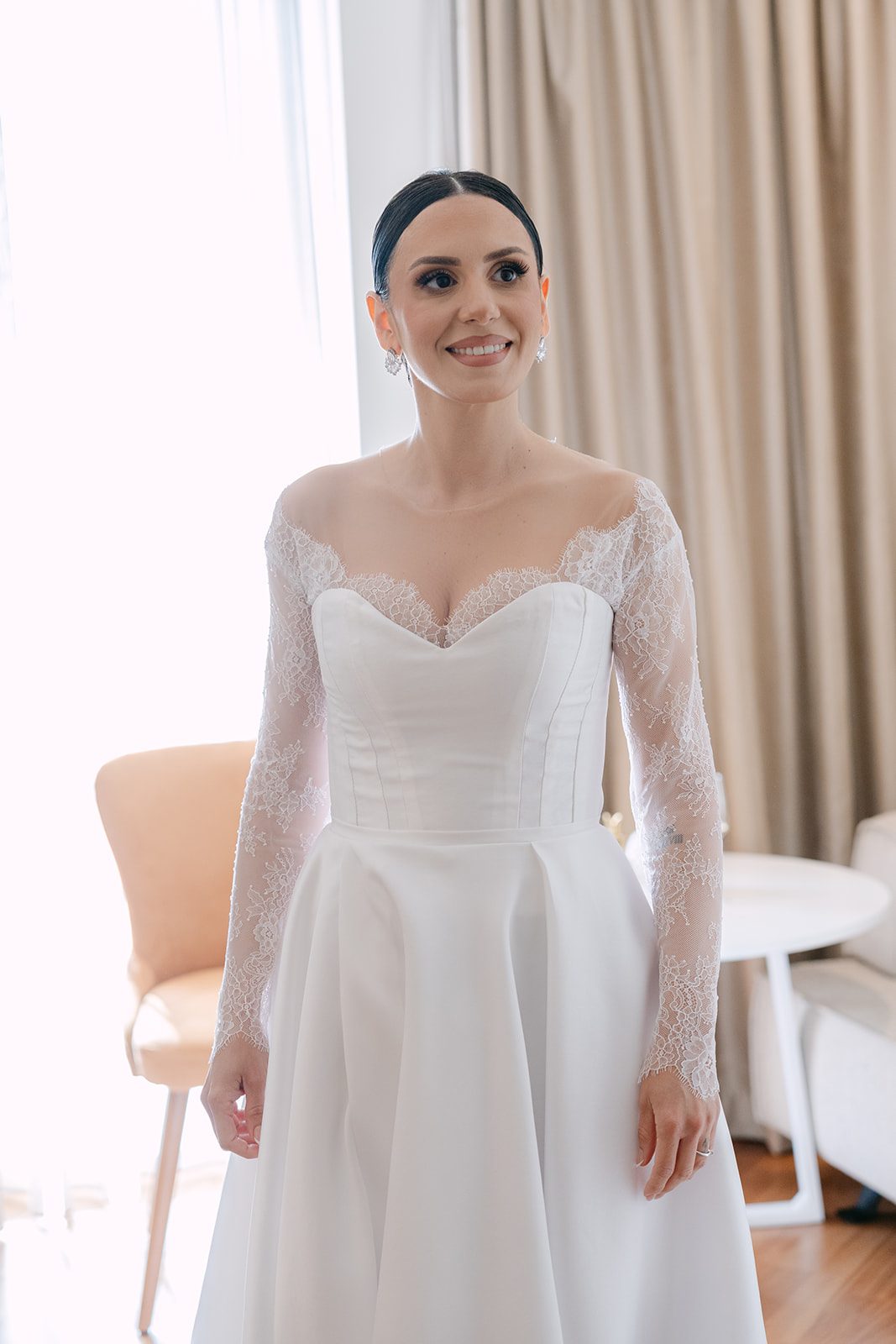
In a Greek Orthodox wedding you spend quite a while standing in front of the priest, and many churches prefer a more modest look. If you love an off-the-shoulder dress or a low back, a sheer shawl, a bolero or a long veil is an elegant answer for the ceremony, and it can come off for the reception.
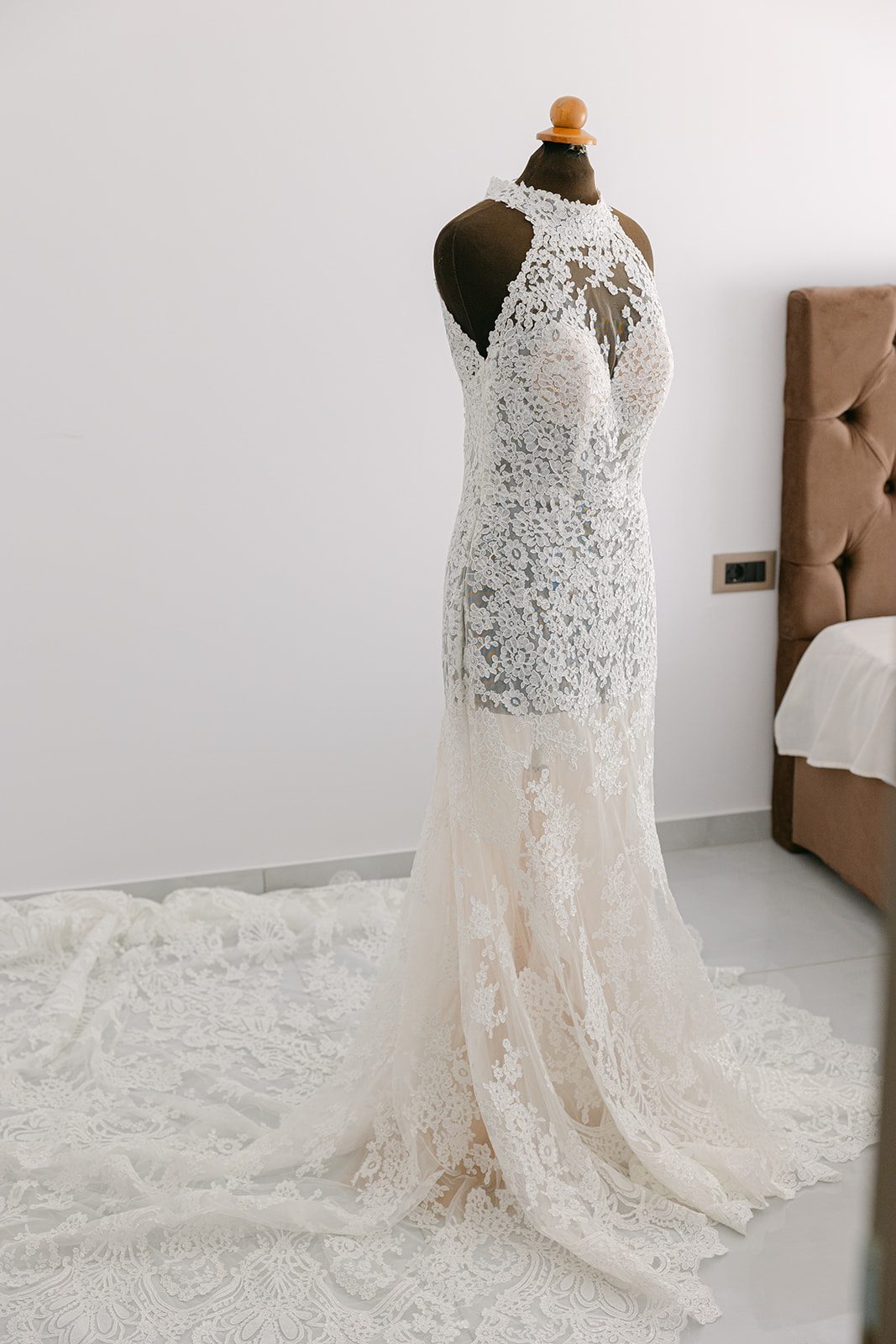
Sheer lace sleeves are a beautiful middle ground, and they photograph wonderfully when your hands move. Mina, at her wedding in Patras, wore a gown with sheer lace sleeves (their story), while Ifigeneia chose a high-neck lace gown (their story).
The veil: length, wind and practicalities
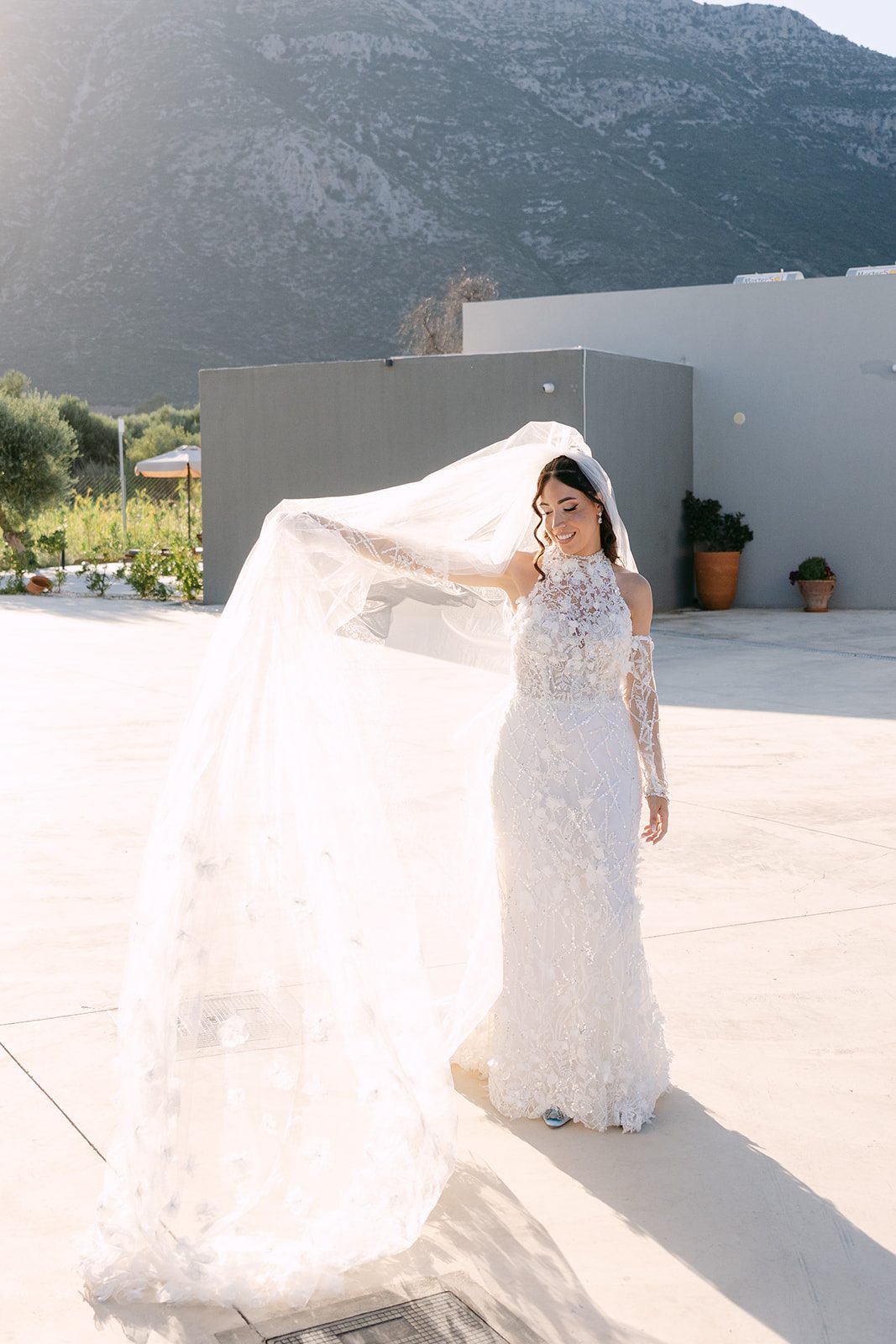
A very long veil makes for some of the most striking photographs, especially when a breeze lifts it a little. Vanessa, at her wedding in Nafpaktos, wore an embellished gown with a very long veil (their story). On a properly windy day, though, the same veil needs some care.
- Ask your stylist to pin the veil securely into your hair, with grips that don’t show.
- Ask a friend or your maid of honour to straighten it as you move around and during photos.
- If the veil is very long, consider taking it off for the reception so you can dance freely.
- A shorter veil is far less fuss at a seaside wedding, where it is often breezy.
Movement, dancing and comfort all day
You will be wearing your dress for hours: getting ready, during photos, the ceremony, the reception and your first dance. At fittings, don’t just stand still. Sit down, lift your arms, climb a step, turn around. If you can’t hug someone comfortably, it will show in the photographs too.
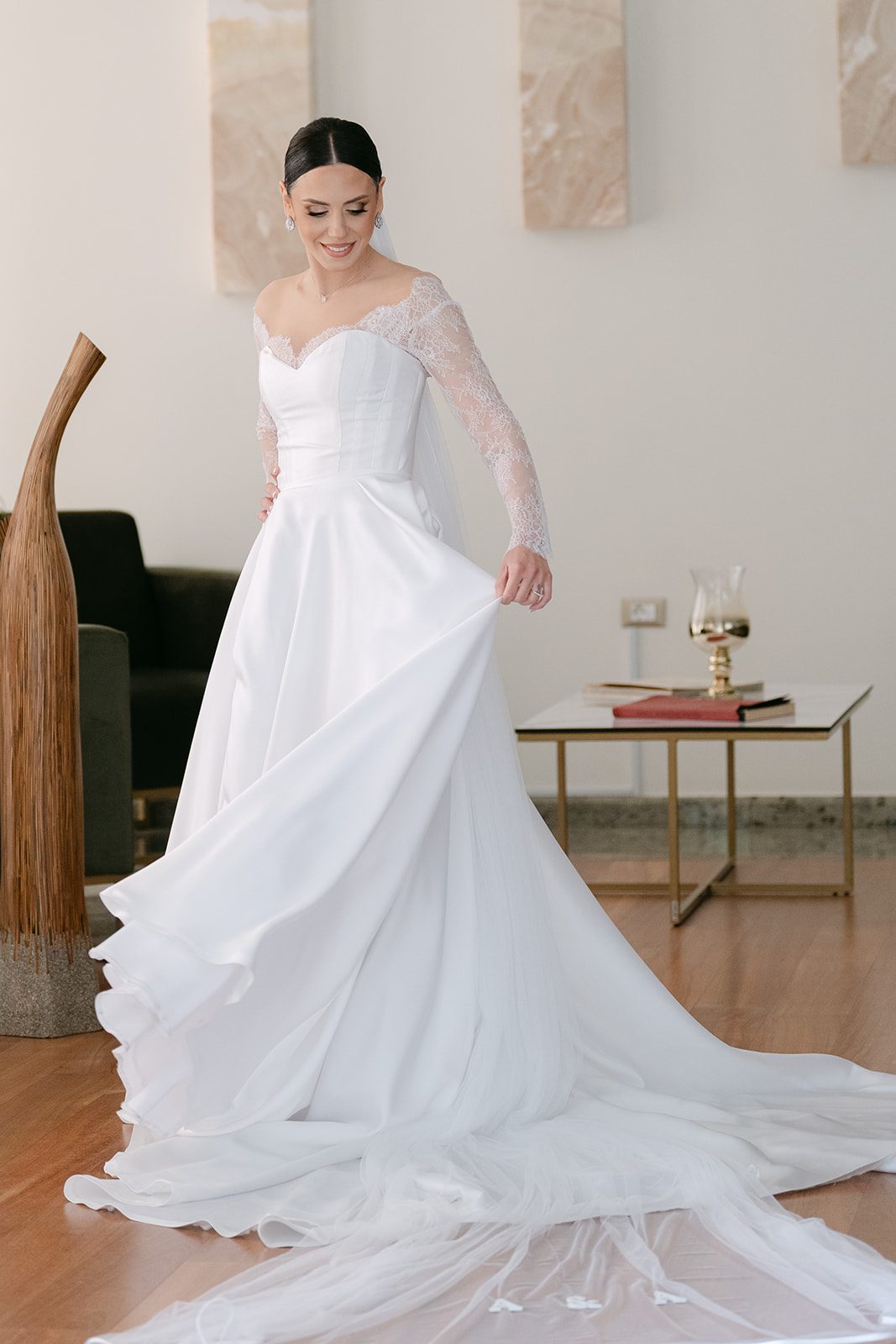
Dresses with a full skirt look great in motion, when you turn or walk. Ask whether the train can be bustled with a button or loop for dancing. And shoes: break them in at home early, and keep a second, more comfortable pair for the evening. For a calm start to the day, see our tips on getting ready as a bride.
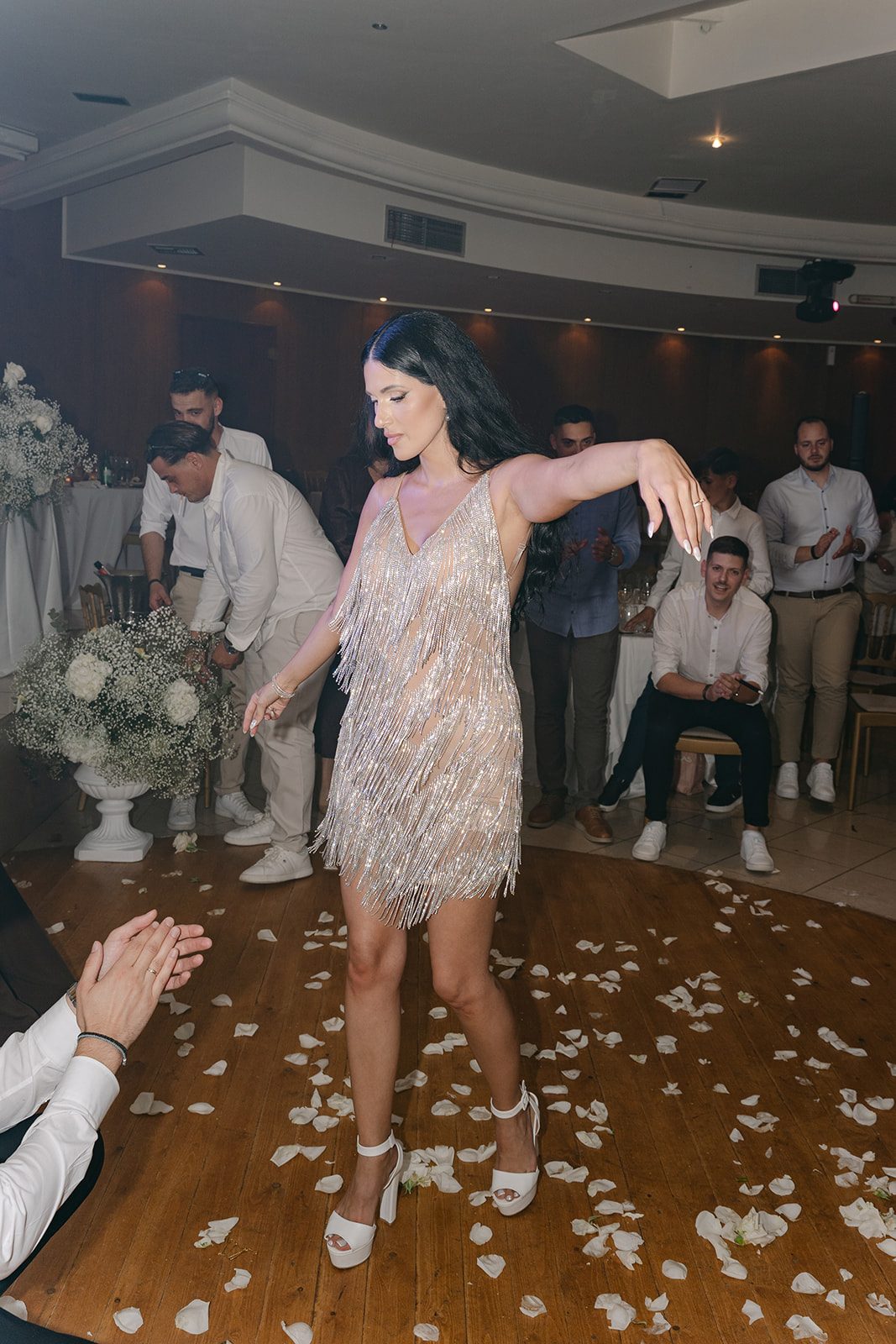
A second dress for the party
More and more brides change into a second, more comfortable dress for the party. Anna, who married in Ancient Corinth, later wore a short fringed dress for the party (their story). It is a chance to show another side of your style, and fringe or a light fabric moves beautifully on the dance floor.
If you are planning a change, let us know roughly when, so we have photographed everything you want in your wedding dress and you don’t miss any of the party.
Classic or on-trend?
It helps to know what is in fashion, but a classic, timeless dress never dates. You will be looking at your photographs for years, so choose a dress you will still love when you come back to them. A trend detail, like an unusual sleeve or an accessory, can be there without taking over.
Wearing the dress again for a next-day shoot
If you are thinking about a next-day photo shoot, you will usually wear your dress one more time. We suggest the session about a week after the wedding, so don’t send the dress off for cleaning straight away. Think about how well it travels, too: a lighter dress fits more easily into a garment bag as cabin luggage.
Fittings: give yourself time
Start looking several months before the wedding. Dresses are often ordered or made to measure, and fittings take time. Book your final fitting close to the day, and bring the shoes and underwear you will actually wear. Take one or two people whose opinion you trust rather than the whole group: too many views just confuse things. For the order of every decision, see our wedding planning checklist.
The right dress is the one you feel beautiful in and completely yourself. Everything else is detail, and details can be sorted.
Frequently asked questions about choosing a wedding dress
How do I choose the right wedding dress?
Start with the style that feels like you, think about where and when you are getting married, and try the dress on while moving and in natural light. The right dress lets you be the one people notice.
Which fabrics photograph best?
Matte fabrics keep clean lines in any light, and lace adds lovely texture in close-ups. Very shiny satin reflects the midday sun strongly.
Do I need sleeves for a church wedding?
Many churches prefer a more modest look. If your dress is open, a sheer shawl, a bolero or a long veil for the ceremony is an elegant solution.
Is a second dress for the party worth it?
If you want to dance more freely, yes. Just tell us beforehand when you plan to change, so we have finished the photos in your wedding dress.
How early should I start looking?
Several months before the wedding, because dresses are often ordered and fittings take time. Book the final fitting close to the day.
Planning your wedding?
Tell us your date and how you picture the day. We would love to photograph it, from getting ready to the party.
Photographs: Dimitris Stergiou and the studio team